5 Positive Hallway Conversations

dreams don't workunless you doI spend a lot of time in our hallways.

At the very least, I’m there before school, during every passing period, in the cafeteria at lunch, and at parent pickup after school. (Ok, I’m expanding to include some of our common areas, but work with me here.) Part of my job in each of those locations is to look for any issues–times where students aren’t meeting campus expectations–but while this is important, it’s not exactly the sort of life giving work that I wanted to do when I grew up.

Over time, I began to wonder how I could use this time differently. I needed to accomplish the initial goal, but I wondered if I could repurpose or reframe my time in the hallways to make it more than just enforcing expectations.

Going into this year, I wanted to find ways to make my interactions more positive with students. I’m one who believes there’s great value in initiating positive interactions with students, and it always frustrated me when I felt like all I did during a passing period was remind students to be on time, wear their IDs, and enforce the dress code.

So I set out to try something different. I’ve been trying these ideas out over the past week. Some are easier fits than others for the first week, but I’ve tried each. Because so many educators have time assigned to be in visible in the hallways, I want to share them (and I want to know what you’d add to the list). Here are five things I’ve tried.

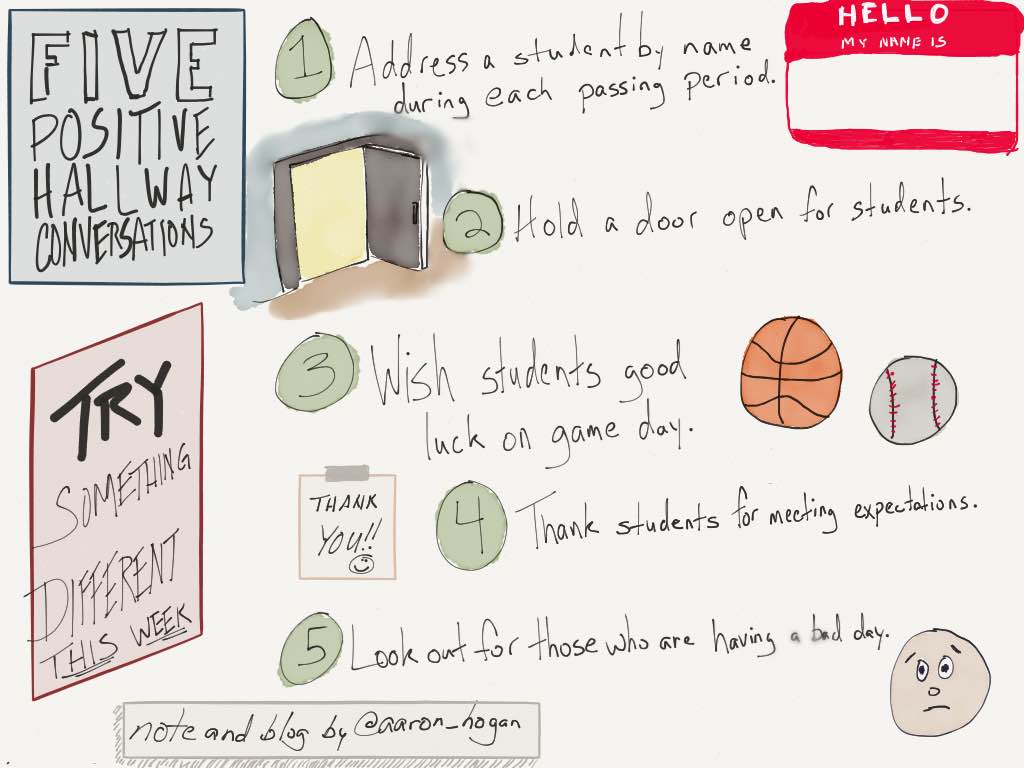
FIVE WAYS TO INITIATE POSITIVE CONVERSATIONS

1) Address a student by name during each passing period. I’m not great with names. Right now, I know a lot of names, I know even more faces, and they’re slowly matching back up; still, the process is slow for me. This active step helps me constantly push the number of student names I can easily recall up. If you see someone you know, ask him or her how the day is going. If you don’t see anyone you know, learn a name. Students often walk the same routes. Get to to know them as they move past your location in the building.

2) Hold a door open for students. This afternoon, I held the door open for students as they left toward our parent pickup area. It created a natural conversation space for me to interact with students, and some positive conversation came out of it that wouldn’t have otherwise. As an administrator, the perception can grow among students that my job is to correct mistakes. Of course addressing students who are not meeting campus expectations is part of my job, but it’s far from the entire (or even the majority) of what I do. Holding open the door puts me in a place of service to students. I like that.

3) If you’re on a campus with athletics programs, wish students good luck at their events on game day. We have close to 500 freshmen on campus, and seeing the volleyball, football, and cross country athletes in their respective gear has already helped me learn several names during time in the hallways. By no means am I saying reduce students to their involvement in extracurriculars, but I’m far from the first to know it’s a great foot in the door to get conversation going with students.

4) Thank students for meeting expectations. This seems odd when I mention it to some people, but I’m a big believer in taking time to provide positive reinforcement for our students who choose to meet our expectations (and yes, this includes everyone from the ones who often struggle to those who could teach the expectations to others). In a seven period day, students could encounter nine sets of expectations (one for each class, one for the cafeteria, and one for the hallways; I’m sure I could list more…). Getting this right is no happy accident, and rewarding students with a bit of acknowledgement shows that we are noticing their work do do things the right way. I think that matters.

5) Ask a consistent question and notice when you get an irregular response. For me this revolves around student IDs. Our students are expected to wear their school IDs when on campus (much to the chagrin of some), but everyone forgets daily expectations from time to time. I regularly ask the same basic question–“Sir/ma’am, do you mind putting on your ID for me?” No, it’s not the most direct way to communicate the “put your ID on” message. Yes, they can say, “No,” in response, but I’m good with that. It’s actually that way by design. You see, what students see as a simple question about a campus expectation I use for much more. I’m constantly looking for students who might not react appropriately so that I can intervene and figure out what’s going on. Maybe life got turned upside down since school ended the day before. Maybe something’s going on between this student and another. Maybe the student missed breakfast for one reason or another. Asking a consistent question helps me intervene when bigger issues may be at play. It has a fringe benefit of identifying students who might need some coaching as to how to address adults well (which happens if I consistently get less than ideal responses to my question). Either way, it’s informing my next steps, which I like.

What other ideas do you have for engaging in positive interactions with students? Share them in the comments or get in touch with me on Twitter (find me here). Hope your time in the hallways is well spent!
5 Positive Hallway Conversations

Teach. And Teach Well.

Kyle Lake, the late former pastor at a church in Waco, TX, passed away suddenly in 2005, and what follows is the conclusion to the last sermon he prepared. It’s one of the most hopeful texts I’ve ever come across, and, at least for me this week, it’s been an antidote of sorts to the situations I cannot control. Here’s what he said:

“Live. And Live Well.

BREATHE. Breathe in and Breathe deeply.

Be PRESENT. Do not be past. Do not be future. Be now.

On a crystal clear, breezy 70 degree day, roll down the windows and FEEL the wind against your skin. Feel the warmth of the sun.

If you run, then allow those first few breaths on a cool Autumn day to FREEZE your lungs and do not just be alarmed, be ALIVE.

Get knee-deep in a novel and LOSE track of time.

If you bike, pedal HARDER and if you crash then crash well.

Feel the SATISFACTION of a job well done-a paper well-written, a project thoroughly completed, a play well-performed.

If you must wipe the snot from your 3-year old’s nose, don’t be disgusted if the Kleenex didn’t catch it all because soon he’ll be wiping his own.

If you’ve recently experienced loss, then GRIEVE. And Grieve well.

At the table with friends and family, LAUGH.

If you’re eating and laughing at the same time, then might as well laugh until you puke.

And if you eat, then SMELL.

The aromas are not impediments to your day. Steak on the grill, coffee beans freshly ground, cookies in the oven.

And TASTE.

Taste every ounce of flavor.

Taste every ounce of friendship.

Taste every ounce of Life.

Because-it-is-most-definitely-a-Gift.”

I think that’s great, and I considered just posting that. But as I read and reread it, I couldn’t help but think that I had something to say to teachers. You see I miss the classroom. A lot. I love my job now, but (like most people who’ve worked two jobs they like) I’d love the chance to take the best parts of each and do that each day. You, too? Right.TEACHSo, I decided to write this (relying heavily on Lake’s text as a model) for teachers.

Teach. And Teach Well.

On the first day of school, try something you’ve never tried before.

Take a RISK. Take a CHANCE. Do something that will stretch you.

Do something crazy. Grade differently. Don’t grade at all. Ask the students what they want to learn. Try out that idea you’ve always wanted to explore—yes, I mean the one you’re not sure will work.

Share those ideas you think are ordinary. They’ll inspire others more than you know.

Give kids a second chance—not just on the first day, but over and over. They’re going to fail (and so are you, and so will I, and it’s ok). And when they fail, let them fail, but teach them that failure is part of their learning and part of your learning. It’s part of mine.

If your students have never experienced success, make their first steps easy.

If your students have experienced nothing but success, push them til they fall on their faces. Their education is incomplete without a chance to learn they can get back up after pushing past their current limits.

In everything you are doing, make the human choice.

Choose to care for a student who is in a tough situation. Choose to help that student be a reader. Choose to help the student who others think doesn’t deserve another chance, another shot, another bit of grace. Choose to ask the tough question, to speak that comment you could pass over, to see the best in others, to extend the benefit of the doubt.

And take care of yourself. You’re teaching students about how hard it is to balance meaningful work with meaningful relationships in a world where 24 hours just don’t seem enough and a time turner seems like a necessity.

Teachers—your job is the hardest job I know of. Your desire to do this the right way and your passion for the young people who walk our halls color our school with contagious optimism.

I’m inspired by your dedication and honored to serve students alongside you.

Thank you for all you do. It is most definitely a gift.

Teachers, I hope you have a wonderful year!

Make the Most of #YouMatterCSISD

Long colored logoEvents like CSISD’s You Matter Conference offer more than most people can take in during a single day. With so much great learning happening, it often feels like you’re missing out on something great that’s happening across the campus. So how do you make the most of your time on August 18th? Here’s a few tips to get the most out of your learning!

1) Go to a session and plan to report what you learned to a friend. Having to have something to say after a session increases the odds of you leaving with something truly applicable to your classroom. In addition to just knowing that you’ll be accountable for the session you attend, we know that summarizing helps increase retention. With that in mind, it’s probably a good idea to…

2) Take time to summarize your learning at the end of each session. Think about the take aways. Were they concrete ideas that are ready to implement on the first day of school? Were they abstract ideas you’ll continue to wrestle with? Either way, take notes about what you remember before you love to the next session. It’ll increase your retention remarkably. In addition to taking down what you learned…

3) Write down names/contact info for the new people you meet in your sessions. You are going to meet great people today throughout CSISD who you didn’t know before. Why risk not remembering that other teacher’s name at the end of the day? Take down that person’s name along with your summary. If he or she is on Twitter…

4) Take time to post a one sentence summary of your session on Twitter and tag a friend. Whether you’re new to the Twitterverse or you’re a seasoned tweeter, sharing your learning on Twitter is a way for every learner to grow. You have something valuable to say that will challenge others. (Don’t believe me? Watch this and tell me you don’t have something to add.)

5) Share your “Three things I want to learn more about this year.” You will encounter an overwhelming number of great ideas at the You Matter Conference. If you don’t limit yourself to a few actionable items as you leave, you run the risk of trying to implement too many new ideas in your classroom. Without an intentional plan to implement new ideas, you also run the risk of getting overwhelmed and not changing anything. Speaking of getting overwhelmed…

6) Give yourself a break. You can push yourself all day, but remember that we have to work tomorrow. You can give yourself a brain break by watching one of these videos. (For what it’s worth, some of these videos are played between TED talks at the live conferences. Everyone needs a brain break from time to time.)

7) Make lunch a learning experience, too. Ask what other people have learned about so far, or check the #YouMatterCSISD hashtag to see what people are sharing from their learning throughout the morning sessions.

8) Plan to participate in the launch of #CSISDchat on Twitter at 8:00pm after the You Matter conference. We’re going to be talking about the importance of relationships in education, and we’d love to have your voice included in the conversation! Never been in a Twitter chat before? Check out this video (or join me for session 2 “Twitterchat From Your Phone”) to get the hang of it.

I hope you have a fantastic time at You Matter, and I’m looking forward to learning alongside you in person and online!

You Are Enough

Before I started teaching, I heard a lot about what to expect during the first year. But other than the (much maligned) “Don’t smile til Christmas” warning (that even as a baby teacher I knew was garbage), I didn’t hear much about the first day.

My eighth first day will be here in another month, and I’d love there to be some stories out there for new teachers to see about something that I’ve heard many educators commiserate about since I started.

My first day of teaching

My first day was terrible. Not in the “I’m supposed to say I was bad because I can tell I’ve grown since then and I don’t want to boast” sense either. It was bad.

I had first period off (which is great any other day of the year for this non morning person), but on the first day it just left time for the knots in my stomach to tie themselves into more dense knots.

Our numbers were growing, so we had portables set up for the first time outside. I was teaching in one, but I didn’t know anything different. I was just happy to have secured gainful employment in July. I would have taught anywhere.

I can remember it like it was yesterday: As I was walking back into the main building to get some water, the power went out. I was going to get a day reprieve! We couldn’t have school with the power out, right? Wrong.

My department head walked around the corner, and instead of telling me she would see me the next day, she said that they were working on getting everything fixed up as quickly as possible.

Awesome.

So I go back to my portable and begin to put on this ridiculous costume that I’m going to use on my first minutes of teaching ever. On top of my uncomfortable shirt and tie teacher clothes I put on a rain jacket. On top of that, I’m wearing my graduation robe. The plan was for me to start with the end (graduation) in mind, then point to how I was going to be their guide on the path toward that goal, and then end with the realization that I was the teacher who could get them there.

What actually happened was more like this.

I put everything on and begin to sweat. Blame it on the first day of school or on it being MY first day of school or on not having any power on August 25th in central Texas. Whatever is at fault, I’m really sweating by the time. Like beads of sweat I can feel. Not fun and not exactly how I wanted to start the day or my career.

I’ll spare you the details about the rest of the day and offer this summary: I pushed through the entire morning of classes packed with 30 high school juniors in a portable with no power for the video clips and slideshow I prepared or for the music I had carefully chosen to let them know I was someone they could relate to. Also there was no power for the air conditioning.

I remember sitting in the lunchroom thinking about what else I could do with my life. The morning left me embarrassed, frustrated, and pretty intimidated about actually coming back on Tuesday.

But I came back, and things got better.

Be yourself

The power was certainly a contributing factor in the great undoing of my first day. Really, though, there was a greater issue: I wasn’t being myself. I’m not the guy who dresses up or can pull off something like what I tried. I gave this a shot because a great teacher I had in high school started the year like this (though one of the outfits she wore was a cheerleading outfit and I do have limits). She was such a memorable and effective teacher because she was herself. Yes, she did the crazy “three outfits” first day that I tried to emulate, but really she was just being herself. She was an encourager, and she was our champion throughout the year.

I think that’s important to remember. Whether you’re a new teacher or a veteran, it’s not your job to be someone else. Just be yourself. You are enough.

I’m not saying stop growing or stop learning, but do know that you are where you are for a reason. You have an incredible power to influence the students who are in your classroom over the next year. Nobody but you gets that opportunity. It is an awesome responsibility and an incredible opportunity.

I love my job as an assistant principal, but, honestly, I’m a little bit jealous of the kind of relationships you’ll begin to develop with students in the coming weeks. Good luck to you. Your work is worth it. Thank you for the time you invest in your students.

When you develop a relationship, it (1)

What can we do to help new teachers?

If you have a crazy first day or year one story, take time to share it. I think there’s a lot of good that can come from new teachers seeing that they’re not alone in those first experiences that can feel really defeating in the moment. Past that, take time to find a new teacher on your campus or in your district who you can help take care of this year. Those little bits of encouragement that seem like small things–a note, a Coke, or an encouraging word–end up being the things that get you through the day.

Rediscovering My Limits

Well, it’s happened again.

I made it through eight whole days believing the lie, but today, I couldn’t do it.

Every year summer seems to do this to me. I start a new year with that feeling that I can do anything and everything. What do I mean? For starters, I start to assume that I can work and work without ever needing a break, ever. Then (since that was rational enough…) I add on the idea that following that up a solid day’s work with a few hours of school work at home at night is actually a sustainable plan. That’s logical, right?

Wrong.

I feel like I’ve been working pretty tirelessly (or so I told myself) to stay on top of things over the past two weeks. Most of the work I was putting in was on things I really enjoy working on and thinking about, things that really don’t feel like “work.” But even with circumstances as good as these, today was the day that reality set in: I have some definite limits.

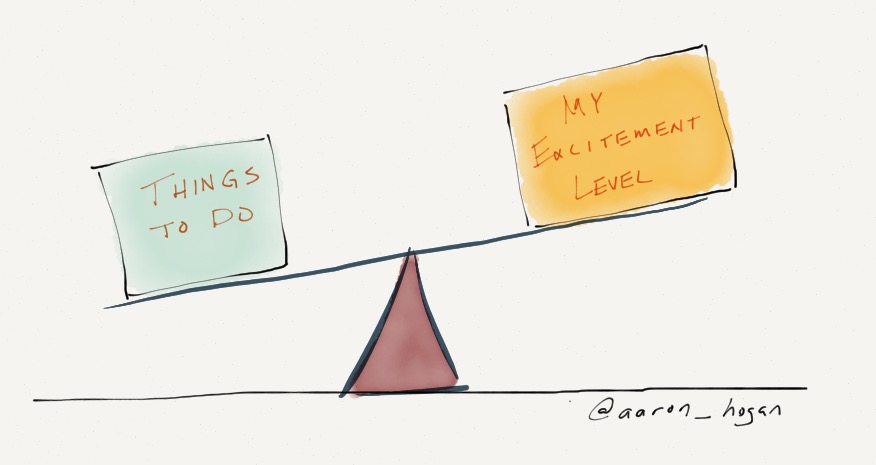
At a distance, I can say the things you’re supposed to believe about that. Things like, “Everyone has their limits” and other ideas that are a lot easier to agree with in theory than in practice. That admission is a good thing, but it being good for me doesn’t make it any easier. After all, today was the first day I felt the scales tipping toward that feeling of being more overwhelmed with my to do list than I was excited about those big ideas.

FullSizeRender

I’m not sure what the percentages are, but I’m confident that although a portion of my desire to do things myself may be to serve others well, too much is motivated by pride that I can get things done the best way or fear that I might not be good enough to get it done. Because what would that mean? It sounds silly now, but I think I’ve thought that before.

It’s worth mentioning that this isn’t a result of who I work with. I work for a principal who is up for trying all sorts of new ideas and constantly works to meet the needs of students on our campus. The other assistant principals are a great group of leaders, and our campus leadership team is a cohesive group that continually goes above and beyond to help our students feel they are valued, capable learners.

All that is to say that this is not a circumstances problem. It’s a me problem.

I suspect it’s also a problem others encounter.

I think people are wired up so that we naturally compare ourselves to one another (I wrote about it a while back), and I feel that the most on the days where I feel my limits. I don’t like that feeling of falling short, not being good enough. Even if that feeling only lasts for a short time while pursuing a worthwhile, challenging goal, I don’t like it. Not one bit.

But it’s going to be there. Either that, or I’m going to begin to live too safely, which seems far worse to me. And if I really believe that people can grow and that people are worth relentlessly serving, then I have to continue forward. I have to acknowledge my limits.

If I’m honest, I probably want to be known as the guy who can just keep going. Maybe it’s holdover from being a distance runner in high school, but that’s one of the places where I feel my limits most now. I just don’t have the time to do everything that could be done at school and still be a good husband and dad. 

I don’t have a pithy way to end this blog with a short and easy solution, and I’m good with that. Anyone who experiences this sort of feeling knows it’s far more complicated than a “3 ways to get past limits” post would be able to offer. What I can offer is the assurance that if any of this resonates with you, you are not alone. Maybe that’s not much, but it’s helpful for me to know that I’m not the only one pushing to do my best only to feel like I fall short.

Get Excited

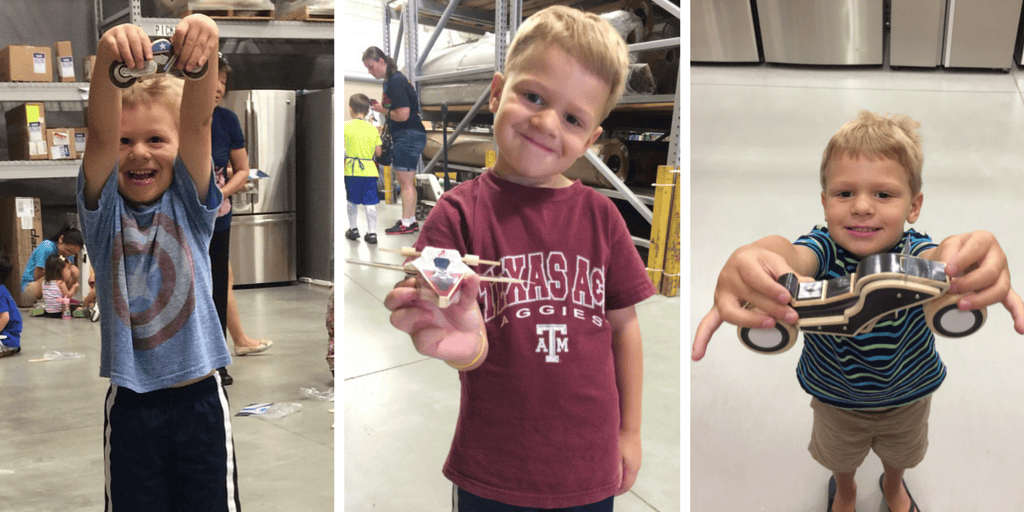
This is my oldest son, Graham. He is excited to share something with you!Untitled design (1)He’s showing off a few of his recent creations from our trips to Lowe’s for their “Build and Grow” kids program. The projects have varying degrees of difficulty, but every week I know that I can count on getting a great shot of Graham showing off what he’s made.

He loves it.

He’ll tell me about what he wants to do with it at home, where it’s going to live in his room, when his brother will be able to play with it (and when he can’t touch it), and so on.

I think most little kids do this. They’ll accomplish something they’re really excited about and proceed to tell everyone about it. Doesn’t matter if you want to know. Doesn’t matter if you’ve heard it before. If they see you, you get to hear about it. And unless you’re really having an off day, it’s hard not to be happy for the kid and get a little excited alongside him/her. There’s something contagious about the excitement of a little kid.

But something changes somewhere along the line. Somewhere between being a kid making something with your dad on a summer weekend and being an adult, the ways we express our excitement change.

I’m not sure what it is that keeps adults from showing our excitement in many of the obvious ways that kids do. I don’t think I’m really qualified to get into a meaningful discussion about what drives that, but I do think that our work as educators is worth getting excited about.

I’d like to share a few things that I’m excited about for next year, and I’d love to hear what you’re excited about, too.

1) This week, we have the first group of students coming back into our building. It’s a small group of new freshmen (about 15% of the freshmen class) who we’re working with to help with the many transitions that moving from eighth grade to high school entail. I’m really excited to get to work with them, and I’m excited to work at a school that values being proactive in the ways that we help students successfully join our campus. I’m also excited because, selfishly, having students in the building keeps me centered around what’s important, serving students. There are a lot of good things that happen while students are gone for the summer (and I know I benefit from the change of pace this provides), but nothing seems to get educators all running the same direction better than serving our students well. I’m pumped for this week!

2) I’m looking forward to putting together professional development that’s different from what we’ve done in the past. We’re adding choice and a few EdCamp elements (voting with your two feet and conversations instead of presentations are two big ones) to provide teachers with an authentic experience of learning with choice. Honestly, I’m a little worried that it will tank, and I think that impacts how I get excited about this (it’s the old “if I don’t act like I’m excited about it, the disappointment will be less” lie). I’m writing it down here so that if you know me, you will hold me to this. It’s time to get excited about something risky.

3) I’m excited to feel capable of challenging and supporting our teachers better than I have been in the past. I finished the year with conversations I enjoyed centered around the question, “What do you hope to change next year?” It was refreshing to hear so much optimism and hope for change from teachers on our campus! I wasn’t surprised by their reaction, but I was surprised that I had never thought to ask about this before. As a result, I’m looking forward to starting those coaching conversations with teachers much earlier than before. I’m enough of a edu-nerd that this alone would be enough to be excited, but I’m far more excited to hear the impact that our teachers want to have on our students. How could I not be excited to encourage educators in their work toward that end?

It’s worth mentioning that I am not the person often called on to be the cheerleader in our school or on our admin team. I’m usually positive, but I’m not overly vocal or passionate or any of the other attributes that normally fit on a top ten list for those who get excited. I’m determined to make sure that’s not going to be an excuse for me. There is too much greatness ready to happen this year in my school (and in yours, too) for us to sit back and not get excited about it. The more we do, the more our students will see good models of it happening. Some of it is sure to trickle down.

If you're changing the world, you're

There is so much that I have to be excited about because there is so much meaningful work happening in our schools. I know it’s happening, and I know it matters. Deep down, you know this; the trick is to pull out your excitement because your work is too valuable to keep to yourself.

So, before you head elsewhere on the internet, think about it: What are you excited about? Share it with someone. Leave a comment here, tell a coworker, post a tweet, or even just write it down. Naming it will make it easier to share. Personality type is no excuse here. Get yourself ready to share your excitement for the coming year because your work is changing the world!

Perspective

choiceWhen I was in the classroom, I loved working through the first big ideas at the beginning of the year with my English III AP students. They would often enter they year ready to teach me a few things about English (since, you know, much like their 16 year old peers in high schools across America, they had things figured out pretty well). I hope that I’m pretty open about learning things (and I did learn a great deal from them), but I loved how we would stretch them at the start the year.

For many of my students, most of their work in school pushed them to either/or answers. There’s some good in being able to carefully trace a line of thought through a singular path, but we started disrupting this early in the fall. These students hadn’t often been exposed to questions with multiple correct answers, and I remember my students being really torn when we got to the point where there were multiple answers that were right to some of the questions we asked in class.

Is the way the community treats Hester’s failure to follow the rules fair?

In what way can a work of fiction be true?

Is technology more beneficial or detrimental to our society?

I would use an example in class that I’m sure I saw somewhere, but can’t recall when. I’d ask a student for a piece of paper, roll it up into a cylinder, and then position it so that from one student’s angle, it looked like a rectangle and from another student’s vantage point, it looked like a circle.

Like this:

IMG_0447

When the first person looked at it and decided he saw a rectangle, he’s made an informed decision (from one perspective). He’s not likely to imagine that what he was looking at was actually a cylinder. From the second person’s perspective, he sees a circle instead of a cylinder. Here’s what I mean:

IMG_0445

This sort of reaction is not unique to my high school juniors. You might not have this problem, but I do. If I’m not careful, when I see something, I’m prone to believe that I’m seeing it the right way. People everywhere are susceptible to this misinterpretation, and the only way I can seem to find to work around it is to make a habit of looking at things from multiple perspectives. The problem is, this ends up pointing out where I’m short sighted and flat out wrong. I don’t like that.

So, what does that mean for us as educators?

I wonder what questions we feel have to be answered with yes or no. If you’re anything like me, I like a sure thing. I like risk, but I like risk most when it works out. Surely I’m not alone in this, right? I need this reminder that there’s often another way, one that’s not my way, but one that will work just fine (or be even better than mine). If I’m not careful, I’ll start to equate my way with the way. At best, this is a nuisance to others. At worst, it stifles creativity, drowns ideas, and belittles those who might look for additional solutions. Obviously, that’s never going to be alright.

It’s always been much easier for me to find places where I feel others need some extra perspective. Here’s my challenge (for myself as much as for anyone else): For every issue you can think of that you feel others need to gain extra perspective, think of an issue where you need to do the same.

What are you so sure about that you haven’t reevaluated in years? I don’t have answers to these questions for myself yet, but I’m beginning to mull over what issues I face need to be rethought with a different perspective.

Who’s with me?

Do We Need A New Model?

This is Graham (my oldest). He’ll be four this fall, and in this video, he’s doing something I never would have imagined was possible–learning to ride a bike with no training wheels.

If you have kids, you’re likely no stranger to this wonderful invention. But if you’re not, what he’s riding is called a balance bike. It’s really an interesting idea for helping kids learn to ride bikes.

The old standard, training wheels, is based on the idea that kids need to learn to pedal before they learn to balance. When the wheels come off, the trick is to pick up the new skill of balancing on your bike.

With a balance bike, the end goal is still the same: give kids who can’t ride a bike a way to exercise and learn the sills they’ll need to ride a bike one day. The thing I like about the balance bike is that kids seem to be picking up the tougher skill (balancing) first. At first, Graham struggled with it, but he really did pick it up quickly (and from what I hear, his experience is pretty typical).

Before I knew about balance bikes, I would have thought a bike with training wheels was the only viable option for helping Graham learn to ride. It was the right scaffolding he would need to teach him to pedal, and then I’d run down the street behind him when we took the wheels off, much like my dad did for me, to help him learn to balance. But because someone rethought what it actually takes to learn to ride a bike, he was able to learn, and learn faster (and I’m not sweating in the Texas sun running behind him, so that’s good, too).

When you develop a relationship, it (3)

Seeing this made me wonder if there are models that we’re holding too tightly to in education. This isn’t a post where I’m going to nail down one issue that we just have to change, but there are a lot of things we hold to really strongly that might be worth rethinking.

Maybe it’s grades that should be rethought. There is a lot of conversation out there on the ways we should rethink accepted practices with regard to student feedback.

Maybe it’s your bell schedule. Is it serving students well or teachers well?

Maybe it’s the way you schedule students. Who gets first priority–student needs or teacher preferences?

Maybe it’s the way you welcome new people to your building or into teams.

Maybe it’s the in the assumptions we make about student behavior.

Maybe it’s an element of campus culture that’s fine now, but shows room for improvement.

Maybe it’s about offering PD credit to individual teachers for time spent learning online.

Whatever it is, it’s going to be unique to each campus, but we have to be careful not to dismiss needs that should be addressed because that’s convenient. I asked a few questions here, but it’s up to you to ask the questions that need to be explored on your campus.

As you get back in “school mode” with next year approaching, take time to think of the things that seem most untouchable on your campus and spend some time wondering if there might be a better way.

Be Good

And now that you don't have to be

When I began teaching, I walked into a wonderful English department full of absolutely incredible teachers. I was passionate and eager (and fighting my introverted nature like a champ), but when school rolled around, reality set in: Even with a few things working in my favor, I had zero minutes of teaching experience under my belt.

No student teaching. No subbing. No nothing. Nada. Zero minutes.

Down the hall in every direction, though, teachers seemed to be making the magic happen.

One teacher could make such meaningful connections with her students quicker than anyone I’ve ever seen and never, ever got rattled in class. It was almost unbelievable.

Another teacher would get 18 year old, high school senior, “I’m too cool for this” types to dance around a little “fire” she created in her room (because, of course you do this when you study Macbeth). Equally impressive.

Another taught AP English with what seemed like encyclopedic knowledge of the texts the class studied. Surely he had someone feeding him information as class was progressing, right?

Then there was the teacher who was a master storyteller with a wealth of knowledge and a gift for imparting that to students, and the teacher with the drive to take on delicate discussions about the power of our words. Don’t forget the teacher who could get more growth out of sophomores in one year than most great teachers hope could hope to see in two years and the teacher could flip from working with honors freshmen to on level seniors throughout her day. And there was the teacher who could teach expectations to any student (and actually get them to live those out).

It’s still a little crazy when I look back on it and realize that these descriptors aren’t exaggerations. In fact, I’m sure I’m selling them short. This was (and still is) a fantastic place to teach.

But from where I sat as a new teacher, it all seemed so easy for them and so difficult for me. As a result, I spent a lot of time working hard to make it look like I didn’t have to work hard at teaching.

That’s not exactly time well spent.

As I got to know these master teachers who taught in the English halls, I realized how much they had invested on the front end. As it turns out, developing teenagers into thoughtful readers and writers doesn’t always happen all that easily. What had looked like effortless perfection was really the result of years of work developing expertise at their craft.

I’d love to say that by Thanksgiving of that first year I figured this out. I didn’t. It took a lot of time and a lot of letting go of my pride (because, arrogantly, I initially thought that I would just put in the work and fake it til I made it as one who “taught effortlessly” like these others).

So why am I writing this?

If you’re an educator, it can feel like you don’t have enough to give. You don’t have to be perfect, you don’t need to be perfect, and (in all likelihood) you can’t maintain being perfect for very long if at all. It’s not an attainable goal.

What I perceived to be perfection in those teachers was really the result of a great group of teachers who were determined to be good to their students and to their colleagues.

Go forth and be good.

It Better Be Real

This is different from most of what I’ve been writing, but I’m giving it a shot. It’s probably the first time I’m working through something that got me mad via this blog. I hope the point isn’t lost in the details. -AH


When you develop a relationship, it (2)

I spent some time looking at cars recently, and though I didn’t end up with a new vehicle, I came away with this insight: Using a relationship to get something what you want is crap.

That’s a little more direct than I usually am, but I was a little upset by the whole thing. There might have been an even more direct summation of my feelings somewhere along the way that’s not getting published.

MY DEALERSHIP EXPERIENCE

At one dealership in particular, I worked with a salesman who was determined to go the relational route for this sell. He did everything he could to fast track our little relationship.  Even before we really got started, he was taking care of me. “Do you need anything? What can I get you before we head out to the lot?”

With my ice cold water in hand, we make our way to the vehicle. He asks if I have a family and about my kids before telling me about himself, and he asks about what I’m driving right now. As we arrive to the vehicle, he starts by talking about the safety features and how they will protect my kids in the back seat in the event of an accident. After hearing more about the car, he gets the info he needs so that I can take it for a test drive. He hops in the car and we’re off, but not before he starts to ask what sort of music I like so he can play it.

He finds something he thinks matches what I said (which is forgivable enough), and somehow we get to talking about how we bought our van at CarMax. “So, how was that?” he asks with more than a hint of judgement. After explaining that it was fine for us, he chimes in, “But, it’s just so impersonal there, right? You’re just in, out, and that’s it.”

A REAL MOMENT

Feeling a little judged for my previous car buying experience (which was just what we wanted), I decide to shut my mouth for a minute (which is an introvert trick–car salesmen don’t know about this I think) and let him direct the conversation. He asks what my wife does for a living. Here’s where things get complicated because I choose to answer his question the way I would if a friend were to ask and proceed to tell him about the work that the organization my wife works for does to make the world a better place (in one sentence–they are working to end child slavery on Lake Volta in Ghana by helping villages learn to fish better using aquaculture in exchange for the freedom of the child slaves and reintegration into their families).

He started to get really uneasy at this point, and I wonder if it’s because he just didn’t know where to go next.

You see, just like anyone else who has done this before, I know that there are really four things he needs to know: Info on my desired monthly payments, credit, down payment plans, and trade in (if any).

And he’s chosen the (allegedly) relational route to try to get this. Except the thing is, the people I have relationships with don’t act like this. As it turns out, I left out a few things from my description above.

Now I love to be right (and I was/am pretty frustrated by this not car buying experience), so I’ve tried to be objective about this. This is more like how my “conversation” developed:

So, you have kids? And they’re young? *Be sure to sell him on the car’s safety.*

Your wife works, too? > Where do you need your payments to be?

Do you like the truck you drive now? It’s a great vehicle. > Is it paid off?

On the one hand, our interactions looked like a relationship; but on the other, he was trying to use a relationship as a way to get close to me quickly so that he could get the info he needed to make the sale.

But that’s his job. Maybe I’m foolish for thinking anything else might happen on a trip to a car dealership.

EDUCATORS, WE ARE NOT SALESMEN

The whole thing has started me thinking about relationships in schools. Some of the students I’ve worked with know the drill and see it coming better than I saw the questions from the salesman. They know what to expect when an educator is trying to connect with them, and they know that that’s likely going to look like a relationship. It’s up to us to make sure we’re doing things the right way in our relationships with students.

Let me make this clear: I think authentic relationships are the key to any community’s health (school or otherwise), and I’m in no way advocating abandoning this sort of approach. What I do believe is that if we’re using relationships to accomplish other goals, we’re wrong.

The way we model relationships with all of our students has to be authentic to what we believe relationships should be.

Relationships matter because people matter (and not because they have a particular fringe benefit that helps us accomplish some other goal).

If we’ve ever used relationships to get a student to behave, or to get a piece of information, or to do anything other than value another person (regardless of age, race, creed, orientation, or any other way you can categorize a person), we’ve missed it.

Starting the new year, let’s get this right.

Get to know the folks on your campus because they’re people and because that makes it worth it. That makes it real.

CKXHREsUYAYeQDC
Image created by Matt Miller (@jmattmiller)