Books Worth Reading: The Short List

BooksWorthReadingThe 2015-2016 school year begins for me on July 27th. (How did the end of July get here so quickly?) While I’m excited about the new year, I’m staring at my “to be read” pile wondering where the time has gone. Like most educators, I’m able to make a lot of progress in the summer, but I know I’m not alone in thinking that there must have been something I missed or something I just didn’t have time to get to.

I wrote several posts at the end of May on “Books Worth Reading” and thought now would be a good time to offer a reminder of some of the books that you could still work in if, like me, your summer is about to come to a close.

connected educatorsFirst up is What Connected Leaders Do Differently. Todd Whitaker, Jeff Zoul, and Jimmy Casas collaborated to create a thorough yet streamlined text that explores the role of connected educators in today’s educational environment. Whether you are looking to get connected or are already swimming in the deep end, this book will challenge you to engage in new ways. At 172 pages, this title is one to start today if you’re going to spend the time you need with it before school begins.

school-culture-rewiredSchool Culture Rewired by Steve Gruenert and Todd Whitaker is required reading for anyone looking to make significant change in the prevailing attitudes on a school campus. This text will help you walk through the steps required to initiate an influential change on campus without bogging down into the minuscule details and minutiae that can seem to slow the pace of other texts. School Culture Rewired comes in at 170 pages.

power of brandingTelling your school’s story can’t be undervalued, and Tony Sinanis and Joe Sanfelippo are two of the best at crafting a meaningful, authentic campus story. The Power of Branding is part of the Corwin Connected Educators Series (which I can’t recommend highly enough), and at just 72 pages, you’re not going to get bogged down in fluff. You will have to deal with this though: Each page has something meaningful for you to consider, so don’t plan on blowing through this just because it’s half the length of the first two.
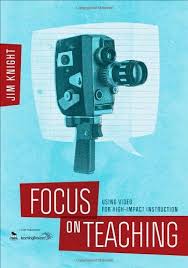
jim knightJim Knight’s Focus on Teaching offers a wealth of strategies for using video in the classroom. If you’re creating video in the classroom, you should read this. If you’re flipping your class, you should read this. If you’re an administrator looking to use video for coaching, you should read this. His highly readable text (which is just 184 pages in length) will benefit you now and for years to come.

learning by choiceA.J. Juliani’s most recent publication, Learning by Choice, is required reading for anyone looking to include more student choice in the classroom. (And, let’s be honest, who couldn’t benefit from hearing more about choice in the classroom, right?) This has heavily influenced my beliefs about choice in professional development as well. I wish I had read it while in the classroom. At 100 pages, you can easily complete your first read of Learning By Choice in the next week, but beware, there is so much that will have you thinking, “I need to write that down” as you read it may go slower than you think.
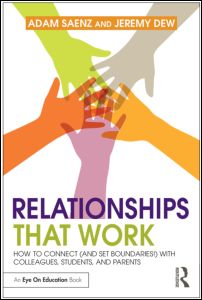
relationshipsIf you have a little more time before you’re back to school, I’m excited about a new book by Adam Sáenz and Jeremy Dew titled Four Ways to Connect (and Set Boundaries) with Colleagues, Students, and Parents. Relational dynamics in organizations (and especially in schools) are quite complicated, and I’m excited to be supported and challenged through their forthcoming text. The book should be on my doorstep on Tuesday (July 22nd), and I’m hopeful it will be as good as I expect!

It’s worth mentioning that each of these books deserves more than a week of time invested in it; regardless of the length, there’s plenty of depth in each of them to explore them more as time allows. I also think that they’re each books that are worth rereading, so if your first read is a quick one, don’t expect it to be your last. As the next school year approaches, my hope is that these books will jump start you back into the year with fresh inspiration and new ideas.

If you have a suggestion that others might like, recommend it with a comment!

The Invisible People In Your School

Right now, there are invisible people in your school.

No, not some sort of ghosts like those who haunt people in books and movies; in your school are students who are “invisible, understand, simply because people refuse to see” them for who they are (not unlike the unnamed narrator in Ralph Ellison’s Invisible Man whose self-description is quoted here).

They’re largely unnoticed, many are compliant, and all are disconnected. Some of them think this is the only way they’ll ever experience school; after all, they missed the welcome to high school orientation, they’re not sure who to talk to about sports or clubs, and their older siblings preceded them in living the invisible high school life (maybe graduating, maybe not). So why expect anything different?

They’re in more of our classrooms than we’d guess, even in unlikely places–places where lots of people are, where people look like everything is ok, where school doesn’t seem to be a struggle, where students live in poverty or affluence or alone or in fear.

But do we even know who they are?

At your school, do you know who is involved and who isn’t? Could you put pen to paper and create a list of who is connected to this sport, that teacher, this club, or that group? Do you know how students would answer the question, “Who are your people?” on your campus? It’s time we look into how we ensure that we’re reaching out to all students who are part of our campuses.

1

You’d be hard pressed to find an educator who would argue against the positive benefits of relationships; however, if we really believe that relationships impact student success, that belonging at school is prerequisite for many students’ belief in their own ability to attain success, we need to take action on their behalf.

Look at the students who were new to your campus this year. Who struggled? Who continues to struggle to meet academic and behavior expectations after spring break? What needs to change in your models and instruction as you teach students to expect better of themselves on your campus?

As you think through those questions, consider what the best ways to prepare students who are new to your campus to meet your expectations next fall. What have you done so far to know who your struggling students are likely to be in the group who will be new to your campus next year? What are their greatest needs? How do you know? What will you do to connect them to something positive in your school community?

Whatever your response to those questions, resist the easy path of believing the rumors about that next group. Instead, determine their gaps and find a great way to teach them expectations and engage them as part of your school community.2 (2)

On my campus, we’re brainstorming options for a number of different populations among our incoming 9th graders. We’re talking about how to serve students who continue to struggle academically with minimal attendance and discipline issues interfering with their school work. We’re talking about how to serve students who might have large gaps in understanding our behavior expectations at our school. We’re talking about how to intervene before high school even begins in order to establish positive relationships while providing a taste of academic success for students who have traditionally struggled.

Though we have experienced success with several new initiatives this school year, I’m thrilled that our success this year is driving conversations toward helping more next year. If you’re reading this with the successful programs you have in place in mind as justification for not starting new conversations to help those invisible students on your campus, you’ve missed it.

What will you do different next year to help these invisible students?

Yes, right now, there are invisible people in your school community. They’re in mine, too. We’re actively looking for them and learning along the way. You should, too.

3

No Whispers

no whispers

The night before Robinson Cano returned to New York to play against his former team, Jimmy Fallon decided to help him get used to the boos Cano would experience at Yankee Stadium.

He set up a huge cardboard cutout of Cano and let New Yorkers boo at him, you know, to practice for their booing the next evening. Check out how things went:

I love the reaction that people have when they realize he’s there. How quickly did they flip from booing to embracing Cano, some of them literally giving him a hug.

Nobody thought anything of these people yelling at a cardboard image of Robinson Cano because that reaction was expected. But when Cano showed up, they changed their language and their stance.

Hall of Fame 2012 (1)What if we chose to speak about people only in that positive light at school this year? Think about the power there.

What conversations could you commit to starting? What conversations could you commit to ending?

What if we focused on what we trust in each other, or how we saw the best in someone recently? What if we assumed the best about each other and always extended the benefit of the doubt?

What if we decided that we weren’t going to allow others to talk poorly of students or colleagues? What if we only engaged in conversation that brought people together instead of dividing them into parts?

Think about specific conversations that you are part of at your school. What if those went differently?

What if visitors entered and left your campus knowing that they mattered?

What if students knew that they were a valuable part of the school, even as they learn to meet behavior expectations?

What if teachers knew that that risk wouldn’t be misinterpreted?

What if families knew they were invited to participate in a culture of trust with their student on campus?

What if you knew they weren’t whispering about you?

What if there were no whispers on your campus?

(Thanks to my friend @stormyhickman1 for pointing me to this video and getting me thinking about this.)

Mind the Gap

post-4683-0-89462200-1402415014Pernille Ripp published this great challenge for administrators recently in which she addressed the gap that often exists between teachers and administrators head on.

Her entire post is powerful and has stuck with me over the past few days. It has had me thinking about a few changes that could have a profound impact on the trust between administrators and teachers in so many of our schools.

Our words build and destroy trust

Certain conversations have settled in as commonplace in education. In her post, Pernille put it this way:

From the poor jokes about going to the dark side to the hushed conversations behind closed doors discussing the latest admin “screw up,” it seems that there is an invisible mountain between teachers and administration that both sides don’t understand the origin of.

This is a situation where many people will look at that, think to themselves that there must be a better way, and not take the time to decide to do something different. We’re crazy if we think we can keep having those thoughts and conversations and expect something different as a result.

I’ve written before about the great care we should take to build others up with our words. If we want a change in the gap, we need a different story. Instead of thinking of and talking about people “going to the dark side,” we need leaders who will be so committed to bringing light that there’s no room for the previous belief. Administrators—commit to being great teachers of teachers who will support teachers when they need it and who will positively lead the campus with excellence.

In addition, we need teachers who will squelch the old story when it comes up (and it will come up). Replace these tired stories with stories of success. During those times when there just isn’t as much (or anything for you) to be positive about, having those landmarks to go back to will be reassuring.

Communicating our mutual trust

There are some assumptions on both sides that can inhibit trust. This won’t solve all of the problems between administrators and teachers, but if we could only correct one assumption, this would by my suggestion: Assume that people are doing the best that they know how.

This includes the idea that my principal may be showing me trust the best way he/she knows how. Be that as it may, how do we work through the gaps in our mutual understanding? Here’s a couple of ideas.

Administrators–Start the year by asking teachers what they feel good at, what they are working to get better at, and how they prefer praise and your attention. Then, make it your job to get them excited about taking on that new challenge. Get to know your teachers, and know the best ways to show your support for them. It can be both incredibly encouraging to have an administrator’s ear and a little terrifying to think you may have just invited that administrator to the riskiest thing you tried in years in your classroom. Know your audience before you show up on a risky day for teachers. The right support fans the flames of creativity. The wrong support is like a fire blanket for innovative ideas.

If it seems like one of your teachers who you can tell is doing a good job doesn’t know it, go out of your way to fix that. Tell that teacher what you love that you’ve seen and ask him or her what you can do to offer support. Maybe it’s time the teacher needs, maybe it’s a thank you note for the extra hours you see the teacher put in or the way that teacher cares for students; whatever it is, there is something you can do to champion and celebrate that teacher. Do it. I don’t know how isn’t good enough.

My only word for teachers here: If you have very specific expectations for your administrator, you should make those in a very specific way. As an administrator, it’s helpful to know those things, and it gives me a way to know that I’m going to meet that need. I’m just one administrator, but I appreciate it.

Is there anybody out there?

Pernille’s blog got me fired up—but not in a defensive way. It got me excited because I hope that I’m working to be an administrator who interacts with staff in a way that these questions don’t come up. Or maybe if they come up (like by people who are new to the campus or the district), people are reassured by campus veterans that risk taking, transparency, trust, and support are all part of campus culture.

So, to Pernille and to all the other teachers who are exhausting themselves to push students to learn, first of all–thank you. Your work makes schools the place where students love to learn, where they know they feel safe, and where they know they’re loved. There are administrators who want what you want, and I hope they are leading your schools.

To administrators, let’s make this happen. If you agree that change needs to happen, start thinking of what you’re going to do differently to make that change reality. It can happen, and as a labeled leader on your campus, I think it’s your responsibility to start the conversation.

Speak Into the Lives of Others

When I was in the classroom, much of my favorite student writing came in response to an assignment I often ended the school year with in my English classes that dealt with two weighty ideas.

Students first encountered this claim—“The thing about humans is that they are constantly comparing themselves to one another”—before moving on to the idea that with few exceptions, we are “people who [are] wired up so that something outside [ourselves] tells [us] who [we are]” (both quotations from Donald Miller’s, Searching for God Knows What).

That’s a lot to consider, but in class, when we kept the conversation focused on how this might apply to the literature we covered throughout the year, we not only found this idea to be true, but we also found this truth to be much more tolerable when applied to anyone other than ourselves. It seemed much easier to see that Huck Finn believed in half-truths and bald faced lies throughout his story than it was to ask whether we have treated others as less than human for the same reasons. Likewise, it seemed much easier to condemn the community that shuns Hester Prynne in The Scarlet Letter than to look at the reasons we accept or reject people today.

Despite the relative discomfort caused by bringing this all up in class, my students overwhelmed me with their responses as they wrote about taking care of their families, setting goals to make people smile daily, and how exhausting it is to try to keep everyone thinking that everything is going great in their lives. Many wrote about clinging to the values that had been instilled in them. More than a few wrote about the relief of not having to be known as “the funny guy” or “the quiet one” after high school.

If we are truly wired up so that something outside of us tells us who we are, we need to identify who we are letting in (and maybe spend some time evaluating what’s healthy and what’s not so healthy). More than that, though, what need to recognize that we have to say to others—friends and foes, new and old—matters more than we might have previously believed.

I hope you seek out opportunities to speak life and truth into the lives of those around you—both those closest to you and those you’ve not even met. It’s your responsibility and your privilege to be able to invest in others in this way.

It’s incredibly encouraging to watch students and staff carry this sort of challenge out on campus. The power hidden within our words is obvious in the yellowed thank you letters that hang in classrooms around campus and in the conversations I watch students make time for when a friend needs their undivided attention. It’s also there in that look in a student’s eye that says, “I want to say something life-giving right now, but I just don’t know how or I’m not ready to let my guard down with these people,” and it’s in a hundred other places as well.

Speak life 2

Regardless of your role at school—admin, teacher, support staff, student—let go of whatever holds you back, take the opportunities to thank those who have poured into you, and challenge others to continue to do likewise.

As you move throughout your week, be deliberate—go out of your way—to speak life into the lives of others and build them up.

Think about it before you move on to the rest of the internet, and make a plan to build someone up.

How (not) to Think of Social Emotional Learning

season ending%0AsaleA Lesson From 5th Grade PE

I can’t remember much from 5th grade P.E., but one day is as clear as can be in my memory.

On the day that I remember well, our P.E. teachers had us run and run and run for the first half of class (and I ran more than most as running was my thing). Once when we were basically worn out, the coaches used the second half of class to drive home a point about the value of taking care of yourself. They gave each student a straw and told us to run until they blew the whistle. So I’m running, running, running, and getting pretty tired. Finally the whistle blows and I think I’m going to get some reprieve when they give us our instructions: we are only to catch our breath through the straw we’ve been given.

As it turns out, that’s nearly impossible for a bunch of exhausted 5th-graders. I cheated because there was no way I was going to admit I couldn’t. I could hardly breathe.

My P.E. teacher went on to connect this to why folks with emphysema experienced exhaustion so quickly. I have no idea how accurate this comparison is, but for the first time, 11-year old me understood that this was why my grandmother always needed to take breaks while we were playing.

How We Think of Social Emotional Learning 

All this came to mind as I began to wonder if we’ve begun to treat Social Emotional Learning as a solution to self-inflicted problems. If we’ve ever characterized our audience for SEL using this sort of mindset, we’ve entirely missed the point.

It’s worth mentioning that I don’t think you have to be mean-spirited to make this mistake. In fact, I think that can happen even with the best intentions in mind. I never intended to think of SEL as a solution for narrowly-defined groups, but my practice has probably said otherwise at times.

That’s not okay.

It’s imperative that we’re telling the right story with regard to SEL. Too much is on the line to stumble here. Framing SEL poorly tarnishes the life-giving value that Social Emotional Learning holds in the proper context.

Why Do We Narrow Our SEL Focus?

On the campus where I serve, part of our vision is that all of our students will know the value of giving more than they take, will be responsible for their own actions, and will know that they are an important part of our school community. If our work with Social Emotional Learning is narrowly targeted to specific groups, I’m not sure that we can do that.

We often narrow our focus with the best intentions as we try to accomplish ambitious goals like the one listed above. We believe addressing the areas of highest need best will solve the immediate problems, and the immediate problems are always what get the most attention.

I think there are a few myths out there that drive some of the decisions to narrowly focus SEL instruction. I’d like to share a few and offer a wider view that may help re-center some of our views of SEL.

Myth #1: SEL is for younger students.

Reality: While it’s true that younger students, whether they be elementary school students or freshmen at your high school, need a more fundamental set of skills for both academics and behavior, students of all ages can work to know themselves better, relate better to others, and make responsible choices.

Myth #2: SEL isn’t for students who excel academically.

Reality: While students who achieve well academically often present as having it all together, they’re often under a tremendous amount of pressure. Anyone who has spent time with students knows that this isn’t unique to high achievers. All students benefit from making good decisions about their needs as individuals and in relationships.

Myth #3: SEL is for students who weren’t taught to behave at home.

Reality: Although it’s commonly thought that some students simply know how to behave when they enter the school doors, I believe that it’s our job to make sure we’ve taught our expectations with fidelity to every student. At schools where most parents read to their children, teachers don’t forgo their reading instruction, do they? All students should be equipped to manage themselves and their relationships with others in the school setting.

Despite the fact that it is sometimes treated this way, Social Emotional Learning isn’t an antidote for the side effects of youth, academic achievement, or behavioral gaps. It’s the means by which we can open all students up to the possibility that they could learn more about knowing themselves, relating to others, and making responsible decisions than they thought possible.

Social Emotional Learning in Focus

Let me be clear: Even the best SEL instruction doesn’t level the playing field for every student. Students are going to struggle, it’s still going to be tough, and some will want to quit trying. That shouldn’t deter our efforts. It would be irresponsible to remain passive when we know that we can provide teaching to help students know themselves, relate well to others, and make responsible decisions.

If we’re not able to find time to help our students develop these qualities, I’m worried.

I think it is more than possible that students can be equipped with the knowledge and skills to choose something better than ignorance when it comes to knowing themselves, relating to others, and making responsible decisions.

How could we allow that to not happen?

Unshared Ideas

I’ve really been enjoying reading Walter Isaacson’s recent book, The Innovators. It’s a history of the computer and the Internet that also explores what made the groups and individuals such visionary leaders and entrepreneurs when their respective innovations took off.

Reading through an early section recently, I felt like the story of John Vincent Atanasoff’s experience with innovation really connected to where I’m at right now. Here’s part of it.

In 1937, Atanasoff was driving along a country road when the idea came to him for an electronic computing device. He quickly began to work toward construction of his version of an early computer and made considerable progress. Impressively, while working largely in isolation at Iowa State University, he managed to develop a computing machine that was, at least in some respects, on par with the work that teams of engineers and mathematicians were developing collaboratively at Bell Labs. As you might expect, in the long run, collaboration won the day and the computing device being crafted at Bell Labs worked better, faster.

But that’s not what caught my eye.

Isaacson says that progress on Atanasoff’s project came to a near stand still when a programming issue came up and “there were no teams of machinists and engineers at Iowa State he could turn to for help” (60). That was astonishnig to me. He was on the verge of finishing up one of the first computing devices ever created and his work came to a stand still because he didn’t have a team with whom he could solve the problem.

As a result, “the almost working machine,” an idea that was just as viable as the one being researched at Bell Labs, ended up being “put into storage in the basement of the physics building at Iowa State, and a few years later no one seemed to remember what it did” (61).

Maybe you’re saying to yourself, “How much would anyone (much less academics) forget such an important invention?”

Here’s how much: In 1948, not even 10 years after it was in working order, a grad student disassembled Atanasoff’s nearly complete computer to be able to use the space it occupied. He didn’t recognize what the computer was even for.

Enlightened trial and error succeeds (1)

All of this started me thinking about how I react when I have the start of a great idea that’s not totally there yet. Too often I choose to sit on the idea instead of sharing it.

“Don’t share that now,” I’ll tell myself. “It’s too confusing right now. And what about problem X that you haven’t solved yet? And who exactly has extra time to be working on this anyway?”

I know that I err on the side of wanting to look like I have it together when I share my ideas, and I don’t think I’m alone in this. Reading through Atanasoff’s story, though, I worry that I have developed a habit of tucking good ideas away because I either didn’t want to ask for help or didn’t know who to ask.

All of this is happening in the midst of the easiest time ever for educators to be connected to one another.

I love that we don’t have to be in the same places today to “visit the lab” where the experts are, and I love that the increased communication has flattened much of the hierarchy that could have existed there in the past.

There’s almost no reason that Atanasoff’s issue should come up again, right? We (connected educators) are a powerful enough voice that people who are looking for help shouldn’t find themselves on the outside looking in. However, I’ll be the first to admit that this doesn’t just happen naturally. It takes a little initiative.

Here’s my encouragement and my challenge: Wherever you are as an educator, you need to be learning from others and sharing with others. Even those ideas that aren’t “presentation ready” yet, even the one you’re almost sure can’t work. Share them. You never know who you will inspire or who might see a creative solution to your linchpin roadblock.

Isaacson concludes his chapter on the invention of the earliest computers by saying:

Innovation is usually a group effort, involving collaboration between visionaries and engineers, and […] creativity comes from drawing on many sources. Only in storybooks do inventions come like a thunderbolt, or a lightbulb popping out of the head of a lone individual in a basement or garage.

I couldn’t agree more.

If you can’t figure everything out on your own, you’re not inept; you’re normal.

If you think your ideas aren’t ready to be shared yet, you’re probably right. Go ahead and share them; that’s how they’ll get better.

If you’re a well connected educator, be willing to listen to a myriad of trusted and new voices.

Sitting on our ideas risks delaying innovation that could profoundly impact our students’ learning experiences. Admittedly, every idea won’t be as influential as developing the next computer (and they don’t need to be).

The real risk is in leaving ideas sitting covered up, collecting dust.

Only in storybooks do inventions come

Choose Great Over Safe

We’re really good at avoiding worst case scenarios. So good, in fact, that this can almost dominate our thinking.

What would change if we started to make decisions based on the best that could happen instead of the worst that could happen?

I’m not advocating being foolish or irresponsible in our choices. It’s important that we’re good stewards of the time we have with students, and I’m certainly not pushing for haphazard decision making.

However, I wonder if we’re so good at making the safest choice that we’re missing out on opportunities that could serve students well. If the fear of the unknown drives us, then it’s time to reevaluate a few things.

We cannot allow ourselves to be motivated by fear of the unknown. Constantly hedging our bets will only push us to live so cautiously, as J.K. Rowling put it to Harvard graduates in 2008, that we “might not have lived at all – in which case [we] fail by default.”

img_1039
So, since I’m sure you’re not in the mood to “fail by default,” what’s the best that could happen as a result of your willingness to try a few things next year (even a few that might fail)?

What’s the best that could happen from choosing to think the best about others throughout your day at school?

What’s the best that could happen from giving that teacher a fresh start this year?

What’s the best that could happen from assuming that educators who aren’t connected still want to get on Twitter?

What’s the best that could happen from your encouragement to a student to sign up for a more rigorous class next year?

What’s the best that could happen from rethinking your bell schedule or your routines to start the day?

What’s the best that could happen from giving the toughest kid in your school, maybe the one who was arrested over the summer (maybe even arrested again) or the one who everyone hopes isn’t in their class or the one who “can’t be controlled” the benefit of the doubt and a fresh start?

What’s the best that could happen from choosing to go a week without complaining?

What’s the best that could happen from celebrating great things on your campus via social media?

What’s the best that could happen if you gave just one good idea a shot?WHY NOT CHOOSE SOMETHING (1)

It’s worth noting that something will go wrong along the way. We have to be ok with that. That doesn’t mean it will be easy, or that we won’t receive some critical feedback along the way.

Why not choose something great over something safe? (tweet this)

The beginning of the year will be here before you know it, and how you start the year deeply influenced the patterns you will maintain over the course of this school year.

Are you willing to do something that’s a little scary in order to accomplish something great?

After all, what’s the best that could happen?

Choice in Professional Development

choice (1)In college, I distinctly remember a professor reading me PowerPoint slides about how students don’t actually learn when teachers just read slideshow presentations. I wish I was making it up, but it’s absolutely true.

Though much of that class was incredibly frustrating for me, it turns out she was wrong about one thing that day. This day, yes the diligent reading of PowerPoint slides, might be the clearest lesson I remember from my education classes, but not because of anything she set out to do. I remember what she said because of the experience it brought me into (unfortunately for her, that was me staring blankly at my classmates wondering silently why we were paying college tuition for this).

Fast forward a few years with me.

I’m an assistant principal now, and I’m a big believer in the idea that giving students choices and providing them with a “just right” challenge makes learning relevant and accessible for all learners (no matter what age). As much as I’ve circled around those ideas, it was time to model that for the staff.

The goal I set was simple: create a memorable experience that demonstrates the power of choice in learning. For the day to be a success, that has to happen. In addition, I hope the their learning experience serves a model that could be easily transferred to the classroom (all of it or the parts of it that fit well).

We do our teachers a disservice when our

With a bit of trepidation, I’d like to share how I hope to make that happen (at least as it is right now). This is what our morning on the Thursday before school will look like:

Everyone will attend three sessions of their choosing. We’ll follow that with a break and a debrief and discussion time. The whole process will take three hours.

Sessions will be classified as presentations (traditional delivery), conversations (flat leadership, plan to participate), and maker sessions (just what it sounds like). We’ll likely have about 20% presentations, 50% conversations, and 30% maker sessions. Teachers will choose three sessions to attend (mix and match however the schedule allows) over the first two hours.

Admittedly, this is not as wide open as choice gets. There are great ways to push the bounds of open choice further with a genius hour or an EdCamp for campus PD, but those aren’t exactly what I’m looking for. Choice is a familiar idea, and the timing isn’t right to drop something brand new on the staff.

Here’s a tentative schedule of the sessions. We’ll have inspirational videos, tips from our social emotional learning team, conversations on topics all teachers struggle with, time to make thank you or You Matter cards, and I’ve even toyed around with having an open gym for a session. I’m probably most excited about three student led sessions that I expect to be quite popular. Overall, the hope is to have every session focus on knowledge, skills, or motivation that will help teachers on the first day or during the first week (though a few might not be realized until later in the first month).

After teachers complete their sessions, we’ll have a short break before coming back together to debrief and discuss their experience. During that time, we’ll reflect on these questions:

  • How was this morning like your students’ learning experience? How was it different?
  • What impact does the timing of this PD have on you? How does that impact your concern for pressures students face? (This is currently scheduled for the Thursday before school begins on a Monday.)
  • What ways did your choices this morning differentiate for your interests? Your ability level? Your sense of urgency about outside concerns?
  • What did you end up learning that you can share with your colleagues?

My hope is that the morning creates a time where teachers have a chance to really choose what they need. Maybe they’ve been presenting all week and what they need is to be on the receiving end of some PD. Maybe they don’t need anyone to tell them what to do, but they do have some questions they need help with. Maybe they need to hear from those students in the student led sessions before they start the year. Maybe they need the uplifting, inspirational shot in the arm. Maybe they’re all thought out by Thursday morning and they need to do something with their hands that will still impact students positively.

I don’t know exactly what they need, but they certainly don’t all need the same things.

I also hope this honors the challenges we put on our teachers throughout the year. Be engaging. Differentiate for all students. Make sure your students are writing in class. Keep up with all your paperwork. And the list goes on…

We do our teachers a disservice when our PD fails to model best practices. (tweet this)


My challenge to you isn’t to make PD sessions on choice.

Your people all need something different. The challenge is to figure out what the teachers need on your campus and try something new (even something that might fail) in front of the staff at the beginning of the year that will stretch you and them. Be willing to ask this question: what sort of learning would keep teachers from looking at the time wondering, When can I get into my room to work?

Before it’s too late, share what you create. Don’t wait until you can revise it based on what you know worked (or so you can leave it as a draft if the whole things blows up).

Your work can serve as both inspiration to others and a point of departure as we explore how to serve teachers well through professional development.

Because I Often Forget

With so many educator voices out there, it’s easy to feel like you don’t have anything to contribute to the conversation.

I know this because I’ve felt this way before. I’m mentioning this now because I felt this way this weekend.

Luckily I came across a video last week that helped my perspective a great deal on this issue. I’d like to share it with you.

I love that question: “Are you holding back something that seems too obvious to share?” That’s so powerful for me because I can talk myself out of a good idea really quickly if I’m not careful. I’ll find a safer route, I’ll bottle up that idea, and then I’ll be frustrated with myself for not speaking up, writing that post, etc.

The other end of this is that I watched that video last week, Tweeted about it, and then felt like I didn’t have anything else to say.

Because I still managed to forget its message in a few days, I wanted to share the message the video brings. Even if it just ends up being for me. That’s enough to make it worth it.

There are a lot of voices receiving a lot of attention right now. Huge education conferences provide the opportunity for some voices to be amplified to untold numbers of educators. We need those amplified voices. Many of them are our champions, our role models, and our friends.

The thing is, we need your voice, too.

I’m not the first person to tell you this, and I won’t be the last person to tell you this, but I’d rather it be said too often than not enough.

You have something to say, and your voice matters.

Your idea may be just what someone needs to hear. Share it! (tweet this)