Let’s Keep Learning – Spring Break

Keep Learning (1)

Spring break is coming up for many educators, and although that can mean the end of the year is approaching, there is still a great deal of time for us to invest in our own professional learning. We expect our students to keep learning, so why not continue in that effort ourselves?

A good deal of my own professional learning comes through what I’m reading. During the year, a lot of that comes through blogs. The wealth of blogs out there combined with the difficulty finding consistent, predictable time to dedicate to reading mean I spend less time than I would like investing in longer works.

For me, spring break provides just the sort of change of pace to dig into something new!

Take time for yourself over the break, but if nothing else, take time to plan out how you can push yourself to continue to grow throughout the rest of the spring semester. It won’t happen by accident. Unless we put a plan in place, schedules get busy, the urgent infringes on the important, and our best intentions end up as the things that never happened.

So, here are eight titles that helped spark my thinking. Even if none of these sound interesting to you, take time to find something that will push you to continue your learning over the next few weeks.

6 Titles to Push Your Thinking
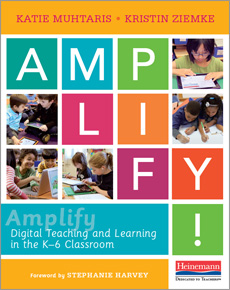
amplifyEven though I’m at a high school, I’m really enjoying Amplify by Katie Mutharis and Kristin Ziemke. Their slim volume is a great overview of not only how technology can touch so many aspects of our schools, but also when and why it should integrate with sound pedagogical practice. The authors are risk takers, and we have a great deal to learn from their experiences. I love the “Three Things to Try Tomorrow” sections that end many chapters. EdTech isn’t a new idea, but their reflections on the topic are well worth your time.

Hacking-Assessment-eBook-coverI’m thoroughly intrigued by the no grades movement. Starr Sackstein’s Hacking Assessment is a great primer on why to consider no grades and how to take the first steps. Her book includes several helpful tips for common push back that accompanies this conversation. If I were in the classroom, I would be using her advice to find my way through this conversation. Instead, I’m working on ways to challenge interested teachers to consider what she has to offer (and the huge upside for students to be able to continue their learning past each test).
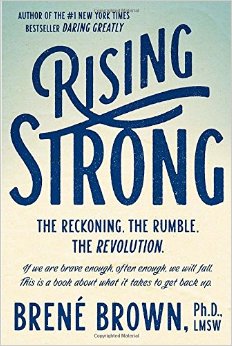
rising strongRising Strong is one of those books that reads really quickly but leaves you with so much to think about that you can’t digest it rapidly. Brené Brown’s latest book investigates what happens after we take the risks that are oh so popular for us to discuss. The reality is that we end up with what she describes as a moment where we are face down in the arena, and we have to be able to pick ourselves up and move forward, learning along the way. It’s an idea I think we all want to embrace, but the process of getting there (and I am by no means there) is less direct than we would like.

originalsOriginals is a book that challenged my thinking. Adam Grant explores a number of qualities we typically associate with being an original and does a little mythbusting along the way. Grant is a great storyteller, and he’s got a wealth of tales worth telling here. It’s worth noting that this is book is one that I listened to as an audiobook, and it presents well in that medium.

 

breaking nightI came across Breaking Night after hearing Liz Murray speak in my school district earlier this semester. To say the least, there’s a lot of story for her to tell; she manages the task brilliantly, and that makes her book both enjoyable and tough to take. Oversimplified, hers is the “Homeless to Harvard” story that’s the stuff of movies (literally–there’s a Lifetime movie that tells her story). But more than one of accomplishment, Murray’s is a story of the value of education and mentors and hope. Tough, but well worth the time it takes to invest.
sketchnoteThe Sketchnote Handbook is a great introduction to sketchnoting. Admittedly, I’m the guy who just needs to jump into something like sketchnoting; that being said, Mike Rohde’s book was just what I needed to develop a foundation of skills for myself. Can I sketchnote anything live? No. It looks like my 4 year old drew it. But given the time, I can put the ideas into practice and create something I’m proud of that I wouldn’t have dreamed of in the past. To me, that makes it worth it. Maybe you’ll think so, too.

Interested in more books to push your learning? Check out the first “Let’s Keep Learning” post here.


So, no excuses. Let’s be learners alongside our students, even when it’s less convenient.

no excuses. Let's be learners alongside our students, even when it's less convenient.

10 Big Ideas From #TCEA16

10 Big Ideas From #TCEA16

I recently had the chance to engage with so many influential educators at TCEA in Austin, and I have a lot floating around in my head that’s waiting to find a landing place. That conference is definitely one where part of the challenge is managing all the new ideas and considering what challenges you’ll accept before planning them all out over a period of time.

Since I find myself in the thick of wading through a sea of good ideas, I thought I would blog about it. I’ve picked ten ideas that stood out to me. These ten ideas stand out as concepts I’ll continue to come back to in order to push my thinking, especially with regard to technology in the classroom.

Admittedly, a lot could be done to unpack each of these ideas, but rather than sharing a series of mini posts, I simply wanted to share the big ideas that have stuck with me from my learning last week. So, here’s what’s on my mind lately.


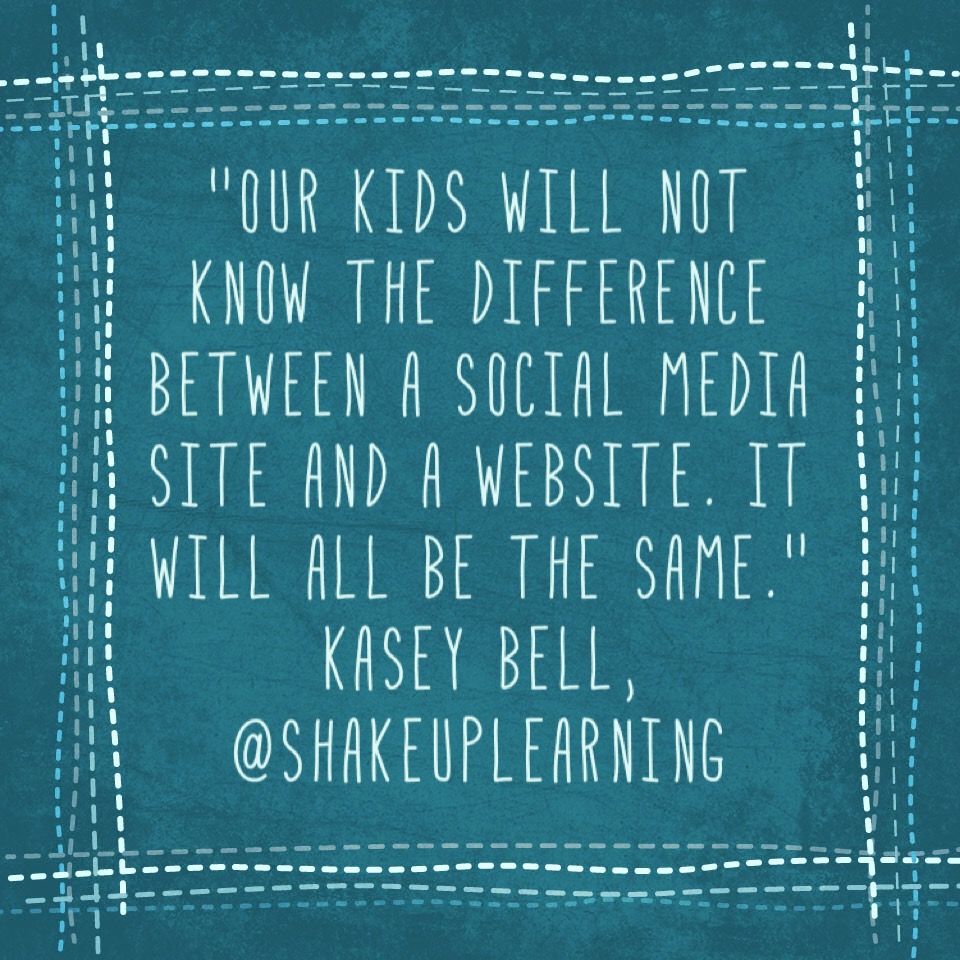
“Our kids will not know the difference between a social media site and a website. It will all be the same.” – Kasey Bell

afhogan

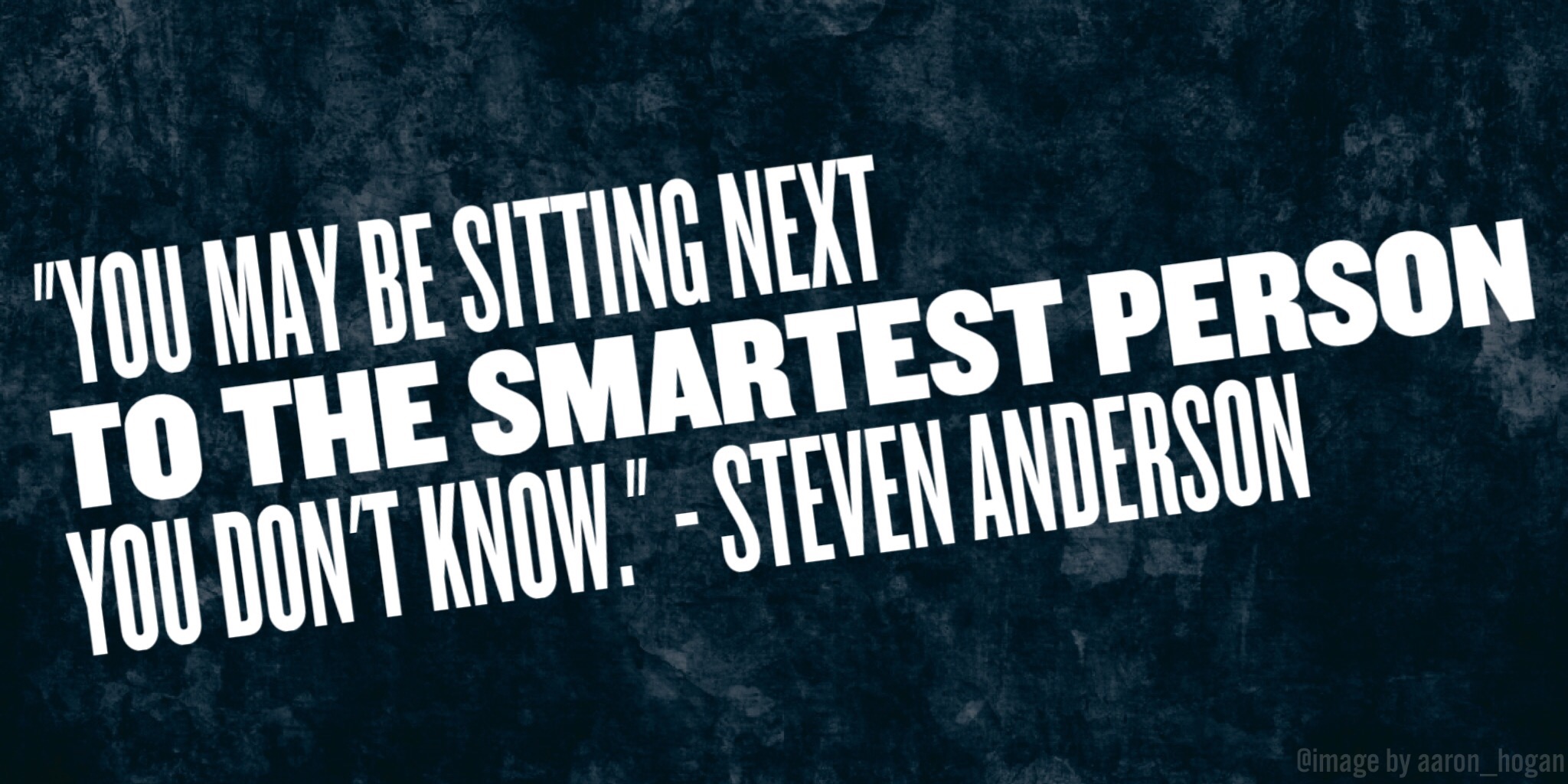
“You may be sitting next to the smartest person you don’t know.” – Steven Anderson

afhogan

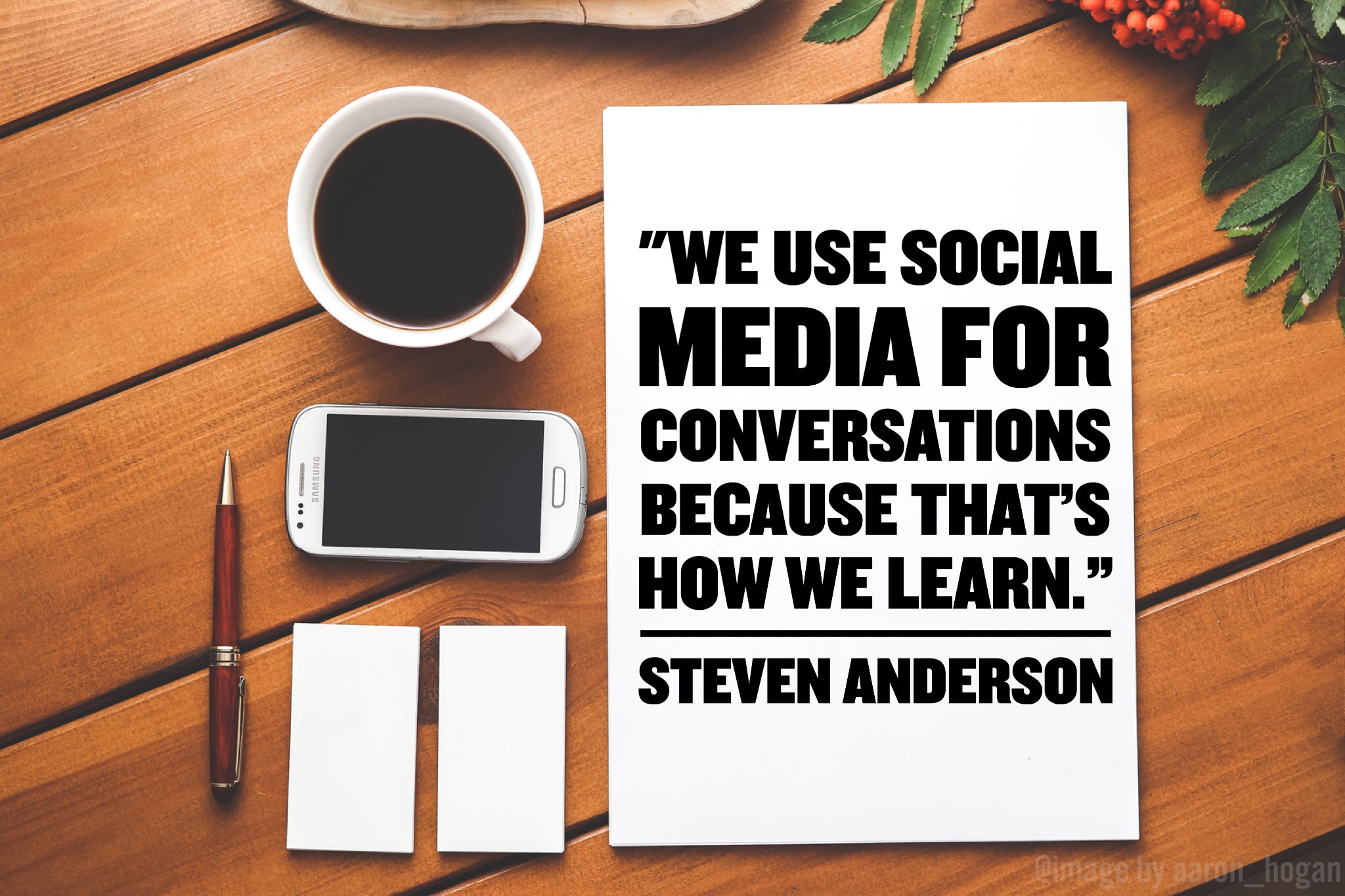
“We use social media for conversations because that’s how we learn.” – Steven Anderson

afhogan

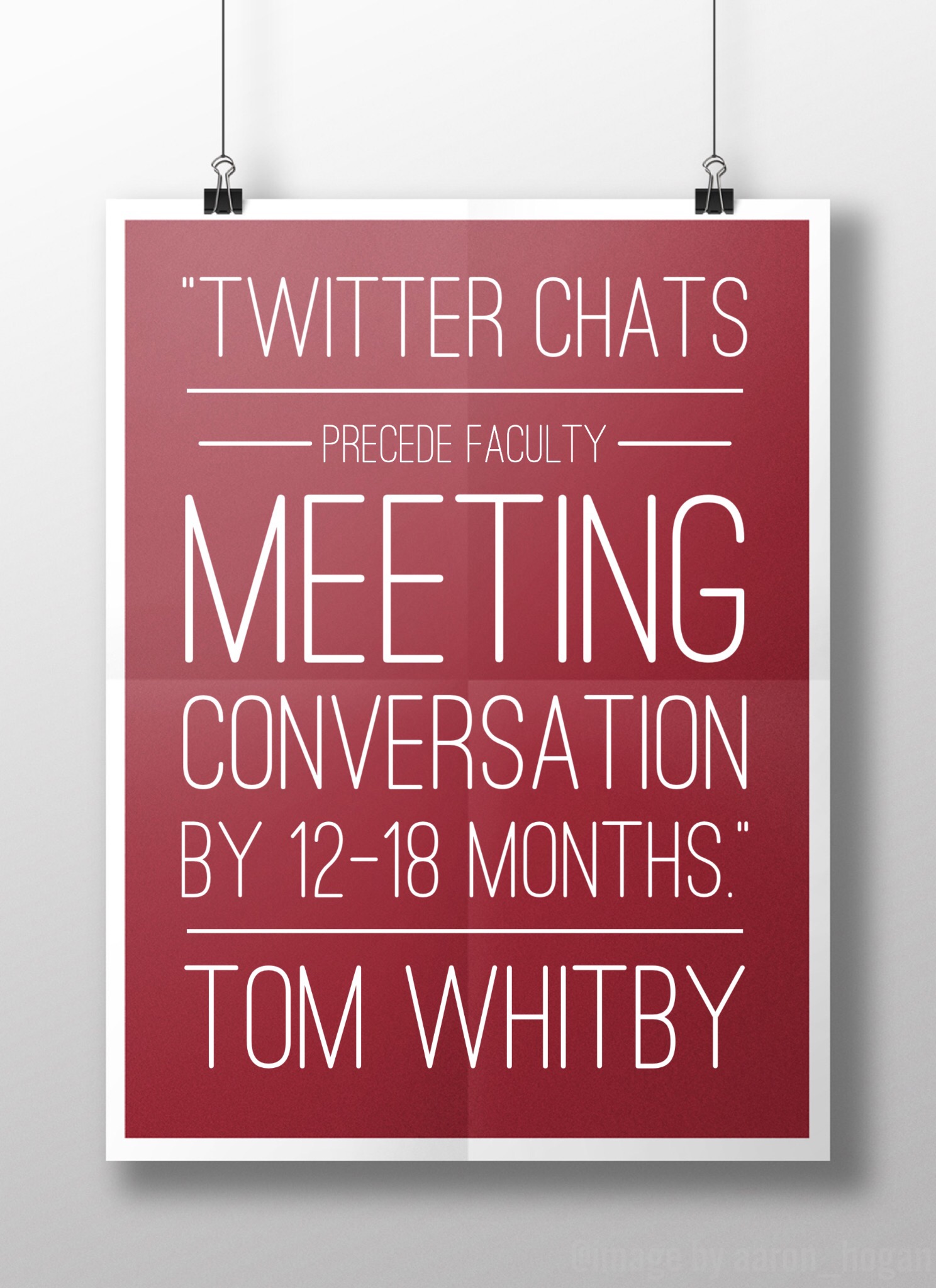
“Twitter chats precede faculty meeting conversation by 12-18 months.” – Tom Whitby

afhogan

“Your comfort zone should never impede the learning of your students.” – Tom Whitby

afhogan

“Our technology decisions should be based on education and learning, not on business sense.” – George Couros

afhogan

“Quit telling people to think out of the box. It’s how you innovate inside the box that counts.” – George Couros

afhogan

“In education, how often does ‘data driven’ mean we become ‘weakness focused?'” – George Couros

afhogan

“Isolation is now a choice educators make.” – George Couros

afhogan

“The higher up we go in the traditional hierarchy, the more people we serve; not the other way around.” – George Couros

img_3099


So, there it is. There’s plenty to ponder, but I’m enjoying thinking through these ideas and considering how we can change to push student learning to a greater extent.

Help push my thinking. What do you agree with here? Disagree with? How are you making change happen based on these ideas?

Let me know what you think. I look forward to hearing from you!

The Questioner and the Doubter

doubter questioner

I’m all for healthy discontent. I think it’s helpful for us to think through and rethink through ideas. It’s often how innovation happens. It’s often how creativity happens. But there’s a real difference in being someone who is seeking to bring about positive change in a situation and being someone who is a curmudgeon.

So, what exactly do I mean?

Let me explain with an example from literature.

In Cormac McCarthy’s The Sunset Limited (which is excellent and well worth your time for more than just these few lines), two characters are engaged in a dialogue. The first mentions to the other, “I aint a doubter. But I am a questioner.” The other responds, skeptically, saying, “What’s the difference?” I love the way the first man replies: “Well, I think a questioner wants the truth. A doubter wants to be told there aint no such thing.”

questioner

I love that distinction–that the questioner wants the truth. That’s so important to the way we approach problems, the way we try to resolve issues, the ways we try to move progress forward.

But it’s something we miss so often, even with the best of intentions.

That’s a problem to me.

We can’t have the hard work of many undone by a few dissenting doubters, and it’s our job as leaders (regardless of title) to help push people to become deeper questioners and infrequent doubters.

Here’s a few ways we can make sure we’re on the right side of this distinction.

A questioner is driven by wonder, but a doubter is blinded by limits.

Ask more questions. Think about what could be. Consider that biggest limit–the one that everyone knows about, the one that everyone thinks can’t change, the one that everyone believes is holding them back. Ask people what they would do if that obstacle were removed. Ask others to think up ways to creatively work inside the box while that road block persists. And ask others to commit to thinking of ways that you can see past the road block together.

A questioner knows he does not know; a doubter assumes he knows what can be known.

A doubter loves to try to paint questioners into a corner using a bunch of fast talking and quick questions (almost to the point that people begin to believe that this doubter may know something we all don’t know). More often than not, that doubter is stuck on the idea that we have to have things–all things… every last little thing–figured out before moving forward. This can happen so much so that the doubter feels petrified of moving forward without total, 100% certainty of the course of action and destination deviating from the current path will require. A questioner knows he does not know, and that sits okay with him. He’s pursuing a solution, thirsty for an answer; but that doesn’t cause him to dwell on the few gaps in current understanding.

A questioner seeks greater understanding, while a doubter discounts what he cannot understand.

A questioner genuinely wants to know and understand more, and at times, it’s not even for any purpose in particular. Many times, the questioner’s pursuit of new knowledge gives him a wide body of knowledge to which he can compare future solutions. It serves as a broad, varied sounding board for future ideas. As a questioner pursues the unknown, he embraces struggle and acknowledges his limits. A doubter’s faith is in himself. He fails to see the need to learn without a particular end in mind, and his perspective is closed not only by his attitude, but also by the shrunken scope of solutions that results from it.


Beyond anything the questioner can do alone, each questioner I know believes that there is such great power in the collective. Those questioners know the value of sharing their learning, asking big questions, connecting to others, and listening carefully as others share likewise. They spend more time listening and less time talking, and yet those with whom they interact end up rejuvenated and energized after their interactions.

So, take a few minutes before you click off to the rest of the internet and think about it. Are you a doubter or a questioner? How do you become more of what you want?

3 Opportunities to Respond With Empathy

empathy

Teaching can be quite the isolating profession. Yes, there are people in and out of your classroom all day long. And, yes, your colleagues are always there next to you in the hallway before school, after school, and during each passing period.

But for all the togetherness and interactions that each day brings, teachers spend an inordinate amount of time as the lone adult in a room with students. While I won’t assume this was every educator’s experience, I often compared myself to those around me (you know, the ones who I’d never seen teach, but believed never had the same problems as I did…), and on the tougher days, ended up pretty beat up by the end of it.

Looking back, I can see so many times where others extended an empathetic response when they didn’t have to. The kindness extended my way left a profound impact on me. The isolating nature of teaching only magnified my need for an empathetic response to my struggles. But as much as I can see the need for this type of response in me, I don’t often go out of my way to look for situations where people might need the same.

So, with that in mind, I’d like to highlight three opportunities for us to respond with empathy to those who are teaching next door.

The “Class seems to be out of control” moment

We associate a quiet classroom with a quality teacher, and when things get a little out of control, it’s really easy for us to compare our experience against that of others and begin to think things like, “Well, if you just did X, that wouldn’t have happened.” It’s important to remember that even in those moments where that fix might be helpful in the long haul, we don’t need to lead with fixing. We must first care for the person who just lived through that experience, and an empathetic response is a great place to start that off.

The “You’re exhausted but you’re still going” moment

This is something that most teachers are guilty of–the “I’ll just keep working hard and smile even bigger the more I’m exhausted” problem. Here, I wonder if we’re quiet for a different reason; where everyone has a tip and an opinion for classroom management, it’s a lot tougher to find answers for those who feel they are drowning in their work. It feels at times like there are so few variables that we have control over; it can be hard to even know what practical solutions to offer. Still, in this situation, I don’t think we can underestimate the power of making sure others know that they’re not alone in that feeling. For further reading here, see Brené Brown’s article “Exhaustion is Not a Status Symbol” and what it has to say to all those who feel part of their work is to overextend themselves.

The “You are doing trying everything & it’s not working” moment

We’ve all been there. Everything was planned diligently. You’re differentiating for a wide range of interests and abilities, you have reworked a past lesson that was already good into something that’s truly been designed for the specific learners in that specific room. And it tanks. Bad. It’s like you’ve not done this before (even though you’re quite good at teaching and engaging young people).

In that moment, we’re tempted to view that teacher as one who didn’t do enough (or at least not the right thing). That teacher doesn’t need our judgment; he or she needs our empathy.

LET EMPATHY WIN THE DAY

Each of these moments tend to be times when teachers get judged. A “good teacher” doesn’t have a lesson that doesn’t work, and he or she never shows any signs of fatigue, no matter the current level of exhaustion, no matter the number of precipitating factors professionally or personally. Except that these are all lies. We know they are, but they’ve been told long enough that if we don’t do something to disrupt the cycle, we run the risk of teaching another round of teachers that this is true. So, when you see those indicators that can be used for malice, be good. Respond with empathy. Extend a listening ear. Be present. Listen to understand. And relate.

The time you spend sharing an empathetic word with a peer will pay exponential dividends in driving shame out of their curiosity and willingness to innovate as they grow.

empathy destroys shame

Four Mistakes From Fall 2015

Four Mistakes From Fall 2015

Everyone makes mistakes. Recognizing that is a big deal, but if I’m not careful, I will end up dwelling on the recognition end of the equation and not looking at what I can do to remedy what I can control in each of my mistakes.

With that in mind, I want to share four mistakes I’ve made this semester and an idea or two about how I might correct them.

Call it accountability, call it sharing my learning, call it what you like. I’m sharing.

Four Mistakes From Fall 2015

POOR PLANNING
Over the summer, Jeremy Stewart (@J_Stew314) and I worked together to put a plan in place for a district Twitter chat. Out of a few conversations, #CSISDchat was born. It’s been a great experience, but I severely underestimated the time and energy it would take to start and maintain a weekly Twitter chat. Thankfully, the chat has meaningfully contributed to the lives of many both within and outside of College Station ISD, but I was surprised to see how much it took to do what it looked like was effortless for others to accomplish. It left me with respect for the many who lead chats I benefit from and with the reminder that for #CSISDchat to flourish and continue to support and challenge educators, this will take some intentional planning. Happily, that’s something I can do.

A BAD ATTITUDE
In August, we ran a program for a group of incoming 9th graders who we knew would benefit from a strengthened foundation of skills–both academic and behavioral. It was a great idea that served a group of students who needed the help and I had a bad attitude about giving up my time to help these students. I’ll spare you the details here and just say that the time was well spent, the relationships that started during that week in August have grown throughout the semester, and I will not discount the value of this sort of work again soon.

MISPLACED EXPECTATIONS
My experience blogging has been great. I’ve learned so much through both the topics I’ve explored and the process of sharing my writing. (I’d be a better English teacher now with this experience for sure… not sure why I never explored this while I was in the classroom.) But, for a long time, and at moments when I’m tired or don’t feel great about my performance at work, I worried far too much about how my blog posts would be received. I think that’s a typical issue that bloggers go through, but for me, the blog experience has brought to light the need to make sure this isn’t something I’m carrying over into other areas. I don’t want to go throughout my days worried about what others think, so I need to work on that.

FINDING BALANCE
If I only get one thing right next semester, this needs to be it. I didn’t plan my time well this year. That meant that time got wasted, I got behind, and the things I value most don’t get the time they deserve. In short, my wife and kids need to get first dibs on my time. I need to do a better job of making sure that happens and that even if they get a lot of time, it’s not what’s leftover after giving of myself at school or at church.

So, there it is. It’s been a great semester, but not one that’s free from mistakes. I’m excited about tackling these areas in which I have control to make some real improvements. Hopefully I’ll be able to see real growth in each of these areas over the next semester.


This blog is post #17 in my 91 day winter blog challenge. I’m posting a blog each day. Check out other posts at #91winterblogs, or subscribe in the top right corner of this blog to receive these blogs as emails. Thanks for reading!

It’s A Struggle

It's A Struggle

I’ve spent about a year actually engaging on Twitter. It took me a while to come around to the idea that I could not only find time to engage, but also find that time was well spent.

In that time, I’ve learned more than I could imagine, connected to educators all over the country (no small task for this introvert), and begun to share on my own via Twitter (@aaron_hogan), this blog, and Voxer (aaron_hogan).

But with so many options for engaging online, it’s been pretty easy for me to walk a comfortable path for throughout much of that experience. Sure, there’s certainly a great deal of hesitation that accompanies the first time you jump into a chat or the moment when you finally, after great hesitation, hit publish on your blog. Those were big moments for me, but those risks dealt with the process, not the content of the conversation.

What I’m realizing is that one of the down sides of having so many great conversations to join is that you don’t have to have the hard conversations if you don’t want to. You don’t have to talk about the parts of education that are hard, or you have the opportunity to talk about them at a distance in terms of risks and vulnerability without tying those to a particular, personal issue. I think it’s time for me to start to dig into those topics a little more.

One example of what I’m talking about is the idea of the “I’m in classrooms for an extended part of my day” administrator.

I can’t remember an idea that I’ve been so drawn to yet so unable to realize in practice.

My failure to put this into practice, or even to put a first step into practice, really weighs on me, and I find myself struggling with a lot of different emotions when I hear principals talk about being able to be in classrooms so much.

I’m jealous of their time spent with students, the relationships developed there, and, honestly, of how easy it all looks on this side of a Tweet. At later points, that turns to hope for a future new normal for myself, but that can seem like it’s awfully far off in the distance at times.

I hate that this is my reaction. Really. I struggle with that.

I have a great deal of respect for what these educators are able to accomplish day in and day out. I’m awed by their impact on students and campus culture. I’m spurred on by their willingness to do the job differently than many educators, yet I find myself in this fearful pattern that takes some work to shake.

And so I start with something small (read that as “easy” so I can have a little success on the front end). Maybe I’ll try to add an hour, just a class period a few days this week. But when that, too, doesn’t pan out, the defeat that’s left feels pretty final. I just feel foolish that I can’t make it work.

It sounds so easy. If you want to not be in the office, just don’t be in the office, right?

Well, I can’t seem to make it work.

Admittedly, I don’t see as many assistant principal voices (or at least I don’t identify many as such) talking about being able to engage at this level with students; maybe this isn’t part of the job I’m doing now.

But I feel the weight of it, and I want to grow into this habit as a school leader. I don’t think I’m alone, but it doesn’t make it feel any less so at times.

Though I’d gladly take any pointers on getting out of the office, that’s really beside the point here. I guess I’m sharing this to say this: Living through the struggle, the emotions, and the effort to rise up out of that feeling that comes when you’ve tried and tried and continue to fail is worth it. I think it’s important we hear that not only from the people who have conquered the mountain, but also from those who are standing at the bottom looking for the path.

As you grow and work through failure, you’re not alone. I say that for you and as a reminder to myself.

You’re not alone, and it’s worth it.

Let’s Keep Learning (Even When It’s Less Convenient)

December is nearly upon us, and as we work through the last few weeks of the semester in what can often feel like a sprint to the finish, I think it’s important for us to remember that if we expect our students to continue their learning, it only makes sense that we should lead in that way as well.

That’s easier said than done (for both students and for educators), but it’s a worthwhile goal nonetheless.

Goals like this don’t just happen, though. If we want to look back on the next three weeks and be able to say we thrived during this time rather than that we simply survived the time between our breaks, we need a plan.

Reading is something that has really helped me slow down when the pace of life feels too fast. Finding that time away, that white space as I’ve come to call it after a series of especially impactful #leadupchat conversations over the past few weeks (Here’s the LINK to the storify from the chat that kicked that conversation if you’re interested.)

We can find white space to grow through what we read.

That’s not a revolutionary idea, but it’s one that we’ll let busy schedules push to the margins until we forget we ever thought it. Below is a list of 9 titles of varying lengths that might help you find that book that will push you to continue your learning over the next few weeks.

9 Titles to Push Your Thinking (separated by length)

200-250 PAGES (to be read over a few weeks)
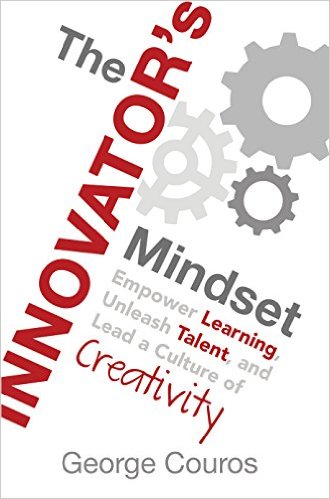
innovators mindsetThe Innovator’s Mindset by George Couros asks educators to consider what it will take to help all educators, teachers and administrators alike, to grow into forward-thinking, innovative leaders. Couros is widely respected throughout education (if you’re not following him on Twitter, click HERE and enjoy), and his text does not disappoint. Don’t figure out if you’re going to read this; figure out when.

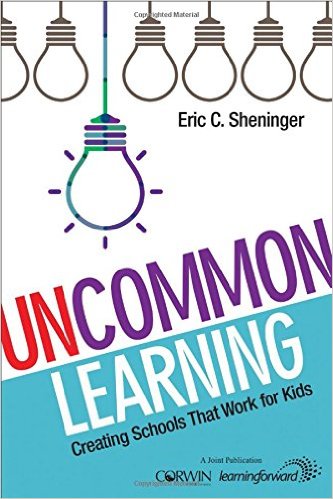
sheningerUncommon Learning by Eric Sheninger explores a number of aspects of education that educators need to be aware of (if not implementing ourselves) right now. From makerspaces and digital learning to BYOD and digital badging, Sheninger has both the educational experience and the expertise as a writer to communicate clearly on each of these important topics. Rooted in his practice during his time as principal at New Milford High School, this text will push you to explore new ideas in new ways.

steinbergDr. Laurence Steinberg, a developmental psychologist, shares his expertise on adolescence and how we can best take advantage of this seminal time in our students’ lives. His perspective is so refreshingly different than most of the literature that hopes to equip teachers and parents to survive this time. Steinberg’s expertise and optimism are a powerful combination, and though this might not be on the radar for many educators, Age of Opportunity is absolutely beneficial for our work.

100-150 PAGES (to be read in a few sittings)
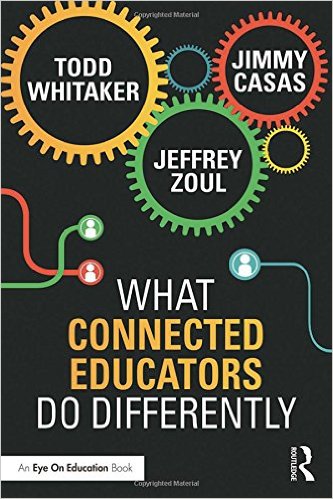
wceddIn What Connected Leaders Do Differently, Todd Whitaker, Jeff Zoul, and Jimmy Casas collaborate to create a thorough yet streamlined text that explores the role of connected educators in today’s educational environment. Whether you are looking to get connected or are already swimming in the deep end, this book will challenge you to engage in new ways. I recently reread this, and I was both encouraged by my own growth throughout the last year and challenged by the number of simple reminders that I’m not living out.

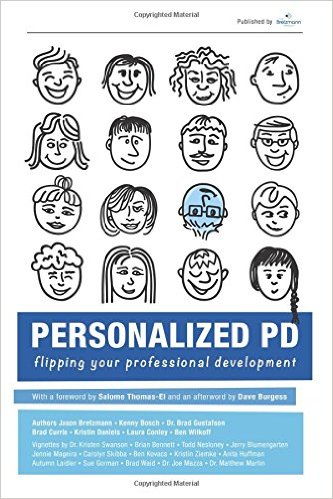
personalized pdPersonalized PD brings together a host of connected educators who have flipped much of their own professional development. It’s great as a primer or as a challenge for educators who are comfortable with their level of connection currently. The personal vignettes set this text apart from others on the topic. The front cover lists Jason Bretzmann, Kenny Bosch, Dr. Brad Gustafson, Brad Currie, Kristin Daniles, Laura Conley, and Ben Wikoff as authors with 14 more contributing vignettes.

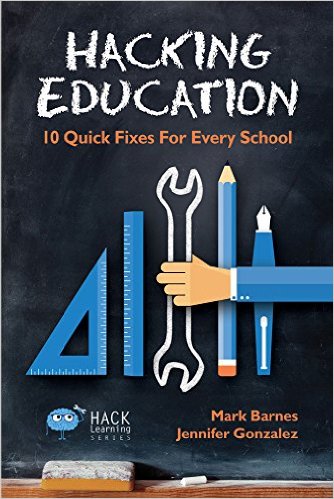
hackHacking Education by Mark Barnes and Jennifer Gonzalez is best described by it’s subtitle: 10 quick fixes for every school. What I love about the Hack Learning Series is that more than most of what I read, the authors are willing to take on the tough questions that come along with their proposed changes. This text pushed my thinking, and I’m sure it will do the same for you.

NOT MANY PAGES (to be read in one sitting)
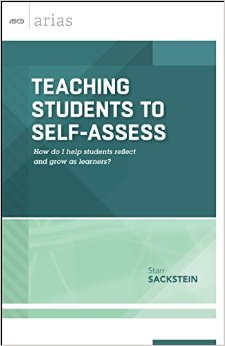
sacksteinTeaching Students to Self Assess
is Starr Sackstein’s 55 page exploration of the question: “How do I help students reflect and grow as learners?” Sackstein has assembled an accessible introduction that is great for any who are considering helping students learn to self-assess. While it absolutely applies to the classroom as you would expect, administrators and leaders can apply the same logic to their work with educators.

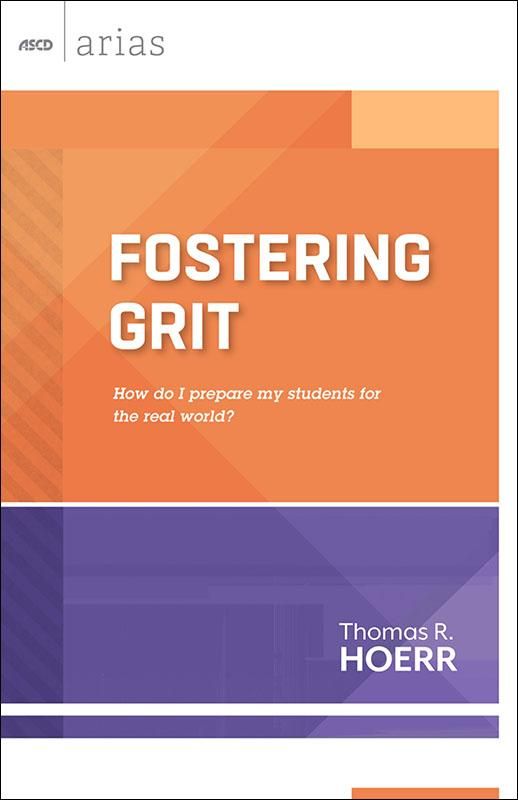
gritIn Fostering Grit, Thomas Hoerr looks at how we are working to make sure our students are prepared to take on the world outside our schools. I love his driving question, “How do I prepare my students for the real world?” Hoerr’s 52 page volume is a great primer for those wanting to enter into this conversation. I’m thankful his primer is out there.

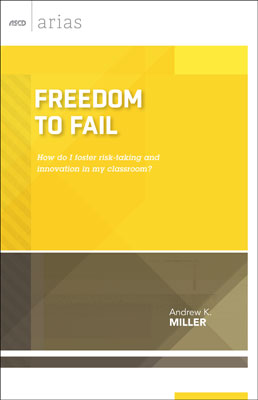
millerFreedom to Fail asks the question, “How do I foster risk-taking and innovation in my classroom?” Andrew Miller’s book offers essential reminders for educators who seek to do just what the title says, regardless of their experience with the idea. At 48 pages, it’s the shortest title in this list, but there’s still plenty here to push your thinking.


So, no excuses. Let’s be learners alongside our students, even when it’s less convenient.

no excuses. Let's be learners alongside our students, even when it's less convenient.

Teaching Self-Control

TeachingSelf-ControlIn high school, I ran cross country and track, and during those experiences, I learned the value of pushing myself nearly  to the point of muscle failure. Our season ran from September through November (if we ran well enough to advance past the district level to the regional or state meets). I and my teammates spent a lot of time thinking about how to train in the smartest ways so that we would have enough stamina to outrun others on race day.

I loved it. The guys were great, running was great, and processing through how to each race was far more complicated than the “get out there and run as fast as you can” approach that some, maybe even many, took.

Any runner who has spent any time trying to get better has learned certain truths. It doesn’t take long to realize you get tired as you continue to exert at a higher and higher level for longer and longer. And all it takes is one race where you go out too quickly to remember that a smart racer will be smart about when he conserves energy and when he chooses to push the pace. Any runner knows that the best way to improve as a runner is to spend a lot of time running, getting better, and learning recognize and push your limits.

What I realize now (thanks to a keynote by Dr. Roy Baumeister at the Learning and the Brain Conference) is that those efforts were really an exercise in self-control. In fact, Baumeister says that self-control is like a muscle in the same way I considered running (ok, he may have said that first, but the ideas still apply to what I remember of distance running). Specifically, Baumesiter said that self-control is like a muscle. It gets tired after exertion, it wants to conserve energy at times (often so that energy is retained for future use), and that exercise increases strength.

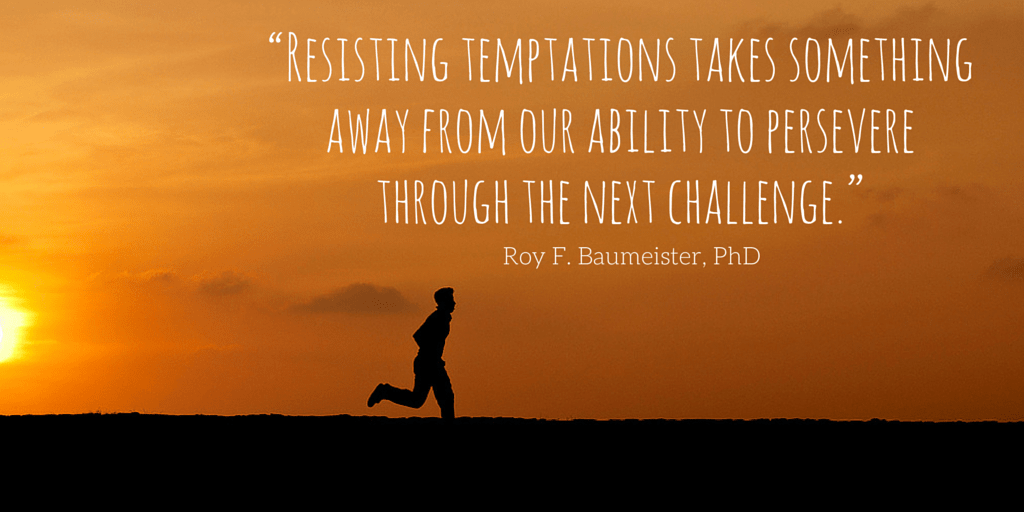
What he had to say snapped into even sharper focus when he added that “Resisting temptations takes something away from our ability to persevere through the next challenge.”

TeachingSelf-Control (3)

Think about the factors that can impact a student’s ability to demonstrate self-control. We often think that self-control is a trait when reality is that it is a skill to be developed over time.

But that’s not how we always think.

We think some kids can behave and some kids can’t. Or maybe we think that some kids can behave and others just persistently choose not to (usually just to drive us crazy, right?).

I’m convinced that Baumeister is right. Self-control is like a muscle, and the more we test it, the closer it gets to failure.

So, what do we do?

I don’t have an answer for every student in every situation (and neither does anyone at the conference I’m at–which is both frustrating and reassuring all at once), but I’m wrestling with how to teach that to students. I really like the two new ideas that Baumeister provided. I’d like to share them here and see what we can think of about how these ideas apply to our efforts to teach self-control to our students.

TWO RESOURCES FROM BAUMEISTER

First, he mentioned an article from the Wall Street Journal article  about Odell Beckham Jr.’s decision to not only keep from wearing out his dominant right hand, but also grow strength in that left hand by completing everyday tasks with it. “The Secret Left-Handed Life of Odell Beckham” (link) is a great example of someone who is wanting greater control of a part of himself. It’s worth noting that he is as good a receiver as the NFL has right now, so it’s not like he’s doing this because he can’t keep up on his own. He’s wanting to get better, and I can’t wait to find ways to package this for student viewing.

Part of me wishes he had a list of things we could to to help our students “use the other hand” to develop more resilience, but I think I’m happy the question is still out there. I’m still mulling this over myself, and I’m benefiting from the thought process.

Baumeister’s other example that really stuck with me centers around this image:

sirens

Here, Odysseus (or Zeus) is subjecting himself to temptation. Sure, he’s putting some constraints in place to help him keep controlled (tying himself to the mast of the ship), but there’s a better way. In Baumeister’s words, “Those with self control don’t do what Odysseus did here; they take a different way home.”

I love the image and how plain it makes the risks of the temptations that come at us.

SELF-CONTROL AND OUR STUDENTS

The more I think about it, the more I think I’m convinced by Roy Baumeister’s compelling comment that there are similarities between working out a physical muscle and working out our self-control. That part is easy to nod along with, but the implications are significant.
Every coach knows that athletes will be pushed and will sometimes fail. Is that how we treat students who are being stretched in their ability to demonstrate self-control?

Rarely.

But that’s the task at hand. Teenagers experience a surge in brain plasticity during adolescence, and it’s our job to make sure we are helping stretch, grow, and cultivate students’ ability to demonstrate greater and greater self-control.

LET”S WORK TOGETHER

Let’s collaborate on this. How will you begin to put this into practice? What ways can you think of that help students to “use the other hand” or avoid the sirens on campus? I have a few ideas, but I’d love to hear what you think.

Leave a comment with an idea or some inspiration for others who are working to help teach self-control.

3 Ways To Embrace Vulnerability

3 Ways To Embrace Vulnerability (1)There’s a lot of buzz in education right now about vulnerability. Many are talking about how it impacts leaders and their ability to connect with others, and more are talking about the trust that’s required for school wide risk taking to become a reality.

If you ask me, we’re starting the right conversations.

One of my favorite lines that I’ve come across as I’ve navigated the vulnerability/risk taking conversation is by Brené Brown. From her perspective (and more and more, I’m becoming a believer and adopting this mindset as well), “Vulnerability is not weakness, rather it is our most accurate measurement of courage and the birthplace of innovation, creativity, and change.”

Hers is a pretty bold claim. Think about what’s really at stake in that line. She’s saying that three of those things that seem non-negotiable for student success–innovation, creativity, and change–they’re an impossibility without embracing vulnerability.

So, it’s good that we’re talking about it.

My worry is that when it comes to vulnerability, we’re getting better at talking about it than at actually living it out. It’s certainly easier to talk a good vulnerability game than it is to live (or start) a life lived vulnerably.

With that in mind, here are three ways we can embrace vulnerability, not just as an idea, but as a week-in, week-out practice at school.

ASK FOR CRITICISM

We all like to think we are open, available, and easy to talk to. More often than not, though, I’m betting we give ourselves more benefit of the doubt here than we should.

Inviting some criticism shows that we really believe that getting better involves having hard conversations, and asking others on campus for their feedback in those moments values the feedback and perspective of the others with whom we often interact.

Asking for feedback without giving any parameters is likely to yield either overly general feedback or overly specific feedback. Give people a couple of choices or maybe even give them a template to work with to help direct their feedback. That also helps ease toward the deep end of vulnerability without having to open up areas of ourselves where we’re less than comfortable venturing in those first conversations.

TRY SOMETHING NEW

Putting your money where your mouth is by taking on something new–especially something that’s a challenge, that might not work–lets you really indicate that it’s okay for others to tackle that idea that maybe only has a 50/50 shot of working.

A lot of educators probably bury ideas because they’re not sure how to work through something that might fail. Your work can serve as a great model (one that you don’t have to nail down the first time; it can be a work in progress, too) for others who are looking for someone who’s willing to take on a new idea, work through the mess, and come out better for it on the other side.

OWN YOUR MISTAKES

Mistakes are inevitable. We have to be willing to own them and use them as the point of departure for productive growth in ourselves. That’s an idea that’s easy to nod your head along to, but it’s tougher to live that out.

In those time where we make tough decisions that impact others and things don’t turn out, I think it’s important for others to hear us and see us take responsibility. That’s not a popular narrative for most. Strength is all about covering up mistakes and appearing flawless and faultless for many. If we really want to bring people together and foster the kind of campus culture that brings people together rather than pushing people apart, then we have to be willing to have take this sort of action at every level of leadership on campus.

Because It’s Worth It…

Not only is there far too much on the line for us to blink past the necessity of living vulnerable lives in our schools, but there is also so much up side in taking on even just one of these challenges. Neglecting to pursue this is a recipe for stagnation and regression.

It’s not easy. It won’t always be much fun. But the work to open yourself to others, regardless of your role on campus, makes you a leader.

Educational Lifelines (aka Check Out These Blogs)

Throughout October, educators in our school district have been challenged to tweet once every weekday. We’ve had daily topics to help ease people in to that process, and things have been going well so far.

Today I woke up to this question:

CQynFhiWEAEWaZS

I just don’t feel I can do this question justice in only a tweet, so here I am writing a post about a few sites I can’t live without. (It’s worth noting that I can’t in any way provide anything close to a comprehensive answer in a blog post either, but at least I can do a little more justice to the question.)

While there are certainly a lot of well known websites out there that put out invaluable content for teachers, I’d like to highlight a few of the personal sites of educators here. I’ve learned so much from each of these educators over the past year. I’m intentionally going to leave you with a very brief summary of what you might find on each of their sites; take time to investigate their writing and engage in the conversations each of these folks are having.

Educational Blogs I Learn From Every Week

A.J. Juliani (blog, Twitter) writes a blog that will help you explore innovation and creativity in everyday situations you may come across as an educator.

Starr Sackstein (blog, Twitter) writes on a variety of topics. I’m most thankful for her example as a blogger, as this blog would not exist without this book she wrote on blogging and her blog that puts the ideas she shared in the book into action.

Pernille Ripp (blog, Twitter) writes with such passion for her work; it’s so easy to see she not only loves what she is doing, but she also wants to help others grow and has high expectations for the work that teachers do. Her work will push you and grow you as an educator. She also has another blog, Ms. Ripp Reads, that’s worth checking out if you’re ever needing to help students find something great to read.

Jon Harper (blog, Twitter) blogs about education and about his kids. His writing is a great reminder to me of the balance we have to keep between our professional and personal lives.

For me, both Jeff Zoul (blog, Twitter) and Jimmy Casas (blog, Twitter) serve as models of what effective leadership as a connected educator looks like in practice. Their writing is authentic, genuine, and challenging for me as a leader.

Kids Deserve It (blog, Twitter) is a fantastic blog that focuses on just what it sounds like–doing the things to serve our kids the way we should be. Todd Nesloney (Twitter) and Adam Welcome (Twitter) are a great combination of encouragement, challenges, and inspiration.

Leadupnow (blog, Twitter) brings together a group of growing education leaders who look at things differently. I’ve had the opportunity to write for them, and I enjoy the weekly pieces they publish.

Vicki Davis (blog, Twitter) writes with such contagious optimism and passion for her work and her students. She writes on a wide range of topics, and her blog is the perfect balance of pick me up and challenge for moving forward in the right direction.

I’m to the point now where if I get questions about anything regarding Google Apps for Education, I visit Alice Keeler‘s blog first for solutions (blog, Twitter). Her work is clear, concise, and incredibly helpful for educators trying to get the most out of GAFE.

So, there’s a few sites to keep you filled with great resources to read throughout the year. What do you like to read? Leave me a comment with what I should check out!